
ACTIVISM DESPITE THE ODDS

Why your voice matters, even on losing battles


ONE DAY LAST SUMMER, I ran into an acquaintance in Laramie. It was June, and the battle around selling off public lands was at its peak. I encouraged my friend to call her senators and tell them to vote no.

She sighed. 

“What good will it do?” she asked. “They’re not going to listen to me.”

I was stunned. This was a woman who had always struck me as politically engaged. If she wasn’t speaking up, who would?

My friend’s skepticism is not uncommon. Many Wyomingites are reluctant to contact their lawmakers, because they assume it won’t make a difference. But how true is that? Is there value in engaging politically, when it seems like a losing battle? How much difference can a small group of citizens make?


“People have a tremendous opportunity to influence legislation,” says Ryan Williamson, a political scientist at the University of Wyoming who specializes in American government and politics. “Legislators want to keep their job. They want to win reelection.” So they pay attention to what their constituents are saying.

Even if you are in the minority, you can make a difference, Williamson says. That’s because most people don’t speak up at all.

“Your average American, their idea of political engagement is maybe voting every four years,” Williamson says. “The high-performing American also votes in midterm elections. … But as far as direct contact with legislators, that is a very small subset.”

As a result, those who do reach out can have an outsized influence.

This is especially true in Wyoming, where each state lawmaker only represents a few thousand people. If they receive 50 calls about a certain issue, that’s a meaningful percentage of their constituency and could make or break legislation — especially on lesser-known issues, where a lawmaker’s mind isn’t entirely made up.
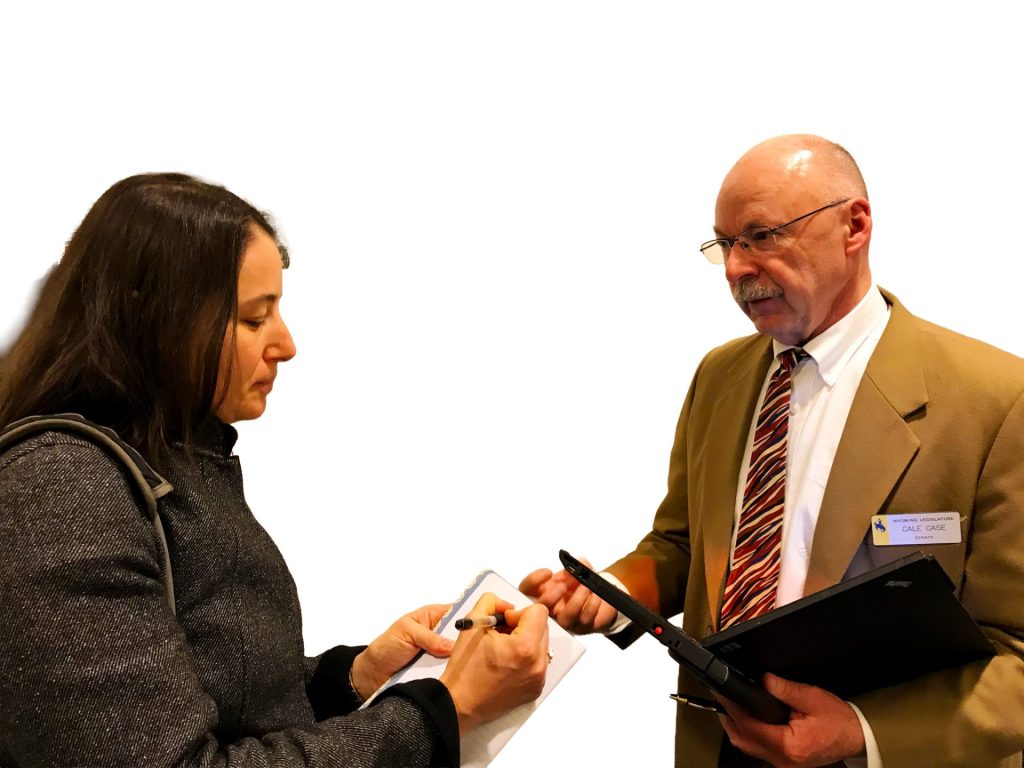
Era Aranow, a former WOC intern and staffer, speaks to Sen. Cale Case at the Capitol. (Photo: WOC staff)

This scenario is not just theoretical; we’ve seen it play out in Wyoming multiple times. 

One of the most recent examples was during last year’s legislative session. John Burrows, WOC’s Energy and Climate Policy Director, remembers the day vividly. 

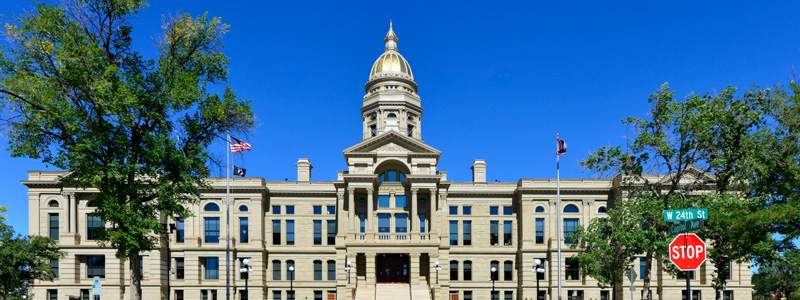
It was Jan. 29, 2025, and John had gone to Cheyenne to testify before the House Minerals, Business, and Economic Development Committee. The committee was discussing a bill that would allow Wyoming to become the dumping ground for the nation’s nuclear waste.

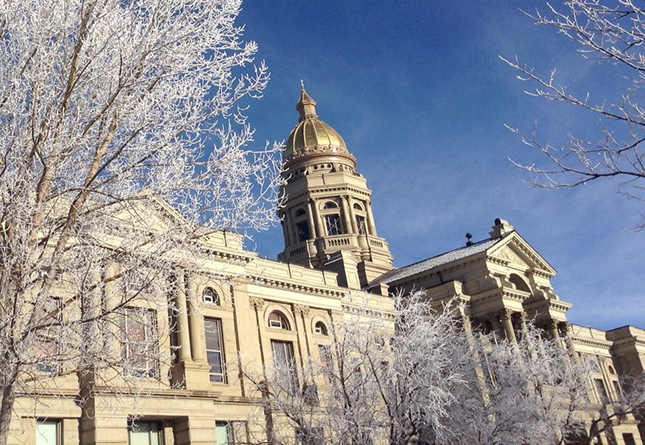
John felt an anxious weight in his stomach as he walked up the snowy steps to the Capitol. He knew the best chance to stop this bill would be now. If the bill made it over to the senate and passed into law, Wyoming would be liable to feel the consequences for thousands of years.

The committee room filled with people who came to testify. Others joined online. Everyone had questions.

The meeting went on for an hour, then two. And then, one lawmaker made a comment that John knew would be pivotal. It was Rep. Mike Schmid of La Barge who spoke. “I’ve got hundreds of emails,” he said. “And not one is in support of … this idea.”

John’s pulse quickened. Hundreds of emails, he thought. And not one in support. Surely, lawmakers couldn’t ignore that level of public opposition.

Sure enough, the bill died that day in committee. Lawmakers couldn’t justify supporting a measure that their constituents so vehemently opposed.

To John, this is a classic example of Wyoming’s small government at work. 

“It doesn’t take as many citizens reaching out to have an impact as you might imagine,” he says. “A hundred or 150 people sending an email … can absolutely stop bad legislation from moving forward.”

This has happened on multiple issues over the years. In 2016, public outcry killed a bill that would have called for federal lands to be transferred to the state. In 2024, public pressure prompted the Wyoming legislature to agree to sell the Kelly Parcel to Grand Teton National Park. And year after year, legislation aimed at dismantling net metering — which allows rooftop solar customers to be compensated for the excess energy they feed back into the grid — fails because of steadfast opposition from citizens.

“Everybody’s coming out with a pitchfork saying, ‘No, don’t do this,’” John says. “And so that’s what keeps winning the argument around net metering.”


You won’t win everything. There are certain issues where lawmakers’ opinions are so entrenched that no amount of public input is going to make a difference. But even if you don’t win outright, there can be hidden benefits.

For one thing, speaking up publicly can raise awareness around an issue. It can help with fundraising efforts for the cause. It can even pave the way for recruiting new candidates for the next election cycle.

Secondly, politics is not a zero-sum game. Sometimes it’s not about passing a good bill, or killing a bad one, but rather about modifying legislation to make it more palatable. Baby steps count.

“Your average American kind of expects change to happen suddenly and substantially,” says Ryan Williamson, the political scientist we heard from earlier. “But especially if you’re in the minority, change is going to come, at best, incrementally.” A tiny win now could pave the way for a bigger victory down the road.

Finally, even if you don’t change a politician’s mind, you are still holding them accountable when you speak up. 

“Even if one person reaches out … then that legislator can no longer say, ‘No one is opposed to this,’” Williamson says. You might plant a seed of doubt in their mind, and that seed could grow over the years as more people start championing the issue.
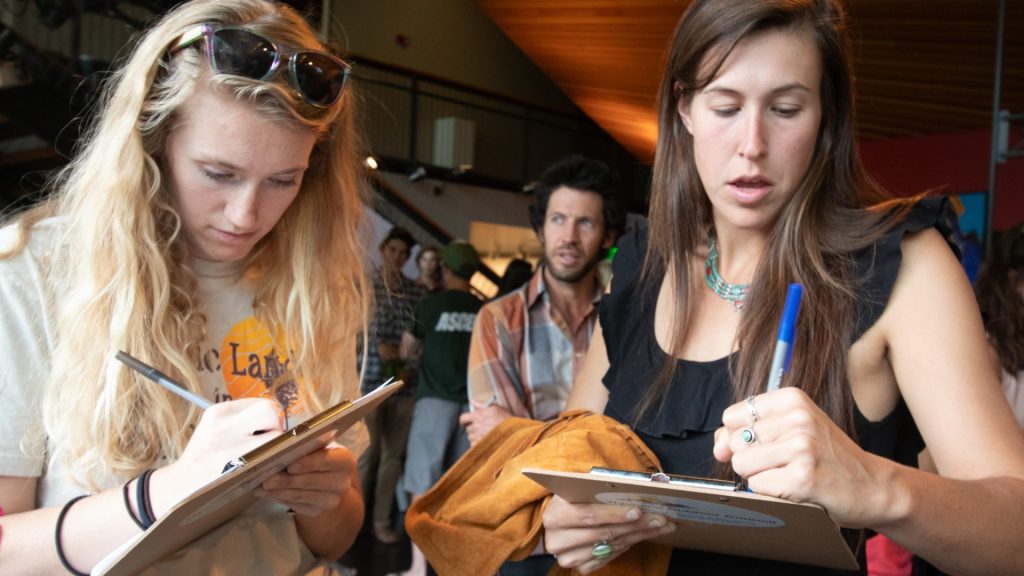
Constituents write to their lawmakers at a rally in Jackson. (Photo: Claire Cella)

At the end of the day, Williamson says, you have to ask yourself if you are content with the status quo. 

“If you care enough, you just have to trust that your contribution, at some point, in some way, will be meaningful,” he says. “Not to do anything would be a kind of implicit endorsement of the status quo.”

That is the mindset that Pinedale resident JJ Huntley lives by. JJ calls her lawmakers at least once a month, and sometimes more often. She focuses mostly on Wyoming’s congressional delegation — the people representing her in Washington — and she reaches out about a range of issues, from public land sales to federal layoffs to immigration.

This outreach has never — not once — made a tangible difference. Her lawmakers have never voted the way she wanted on these issues. But JJ is unwavering in her commitment to keep trying. 

Part of it is personal: The process of articulating her position reaffirms her values. It reminds her of everything she loves about Wyoming. Partly, she wants to set an example for the next generation. And partly, it comes down to the belief that if she says nothing, she will be complicit in bad policymaking.

“If we aren’t talking, then we’re basically saying we don’t care,” JJ says. “There will not be a change. … I want my voice to matter, so I have to keep talking until it does.”

“If you care enough, you just have to trust that your contribution, at some point, in some way, will be meaningful.”

— Ryan Williamson

I recently attended a film screening in Laramie hosted by a Wyoming nonprofit. After the movie, the attendees sat around in a circle and talked about our hopes for the future. The executive director urged us to be vocal during the legislative session.

There was silence for a moment, and then one woman raised her hand. 

“How much good will it actually do to contact my lawmakers about this?” she asked.

I nearly leapt out of my seat. “I can answer that!” I said eagerly. 

I proceeded to tell her everything I had learned researching this story: how a small but vocal minority can influence legislation, especially in a state like Wyoming; how political engagement often has hidden benefits, even if you don’t win outright; how tiny victories add up.
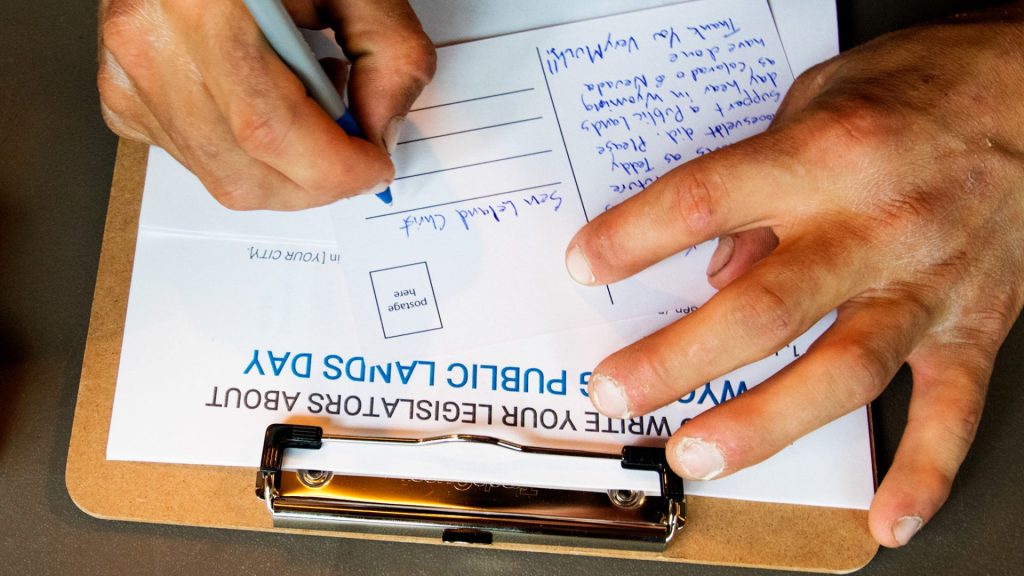
A constituent writes to a legislator in defense of public lands. (Photo: Claire Cella)

We can’t know how — or if — our input will make a difference. But one thing is sure: If we don’t engage, we won’t be making a difference.

As Ryan Williamson put it, “Politics is hard. Change is slow. And it’s easy to get disenchanted. But the health of a democracy is dependent on engagement from the citizenry.”

If you’re on the fence about speaking up, he says, ask yourself this: “How would you feel knowing that you could have done something?”

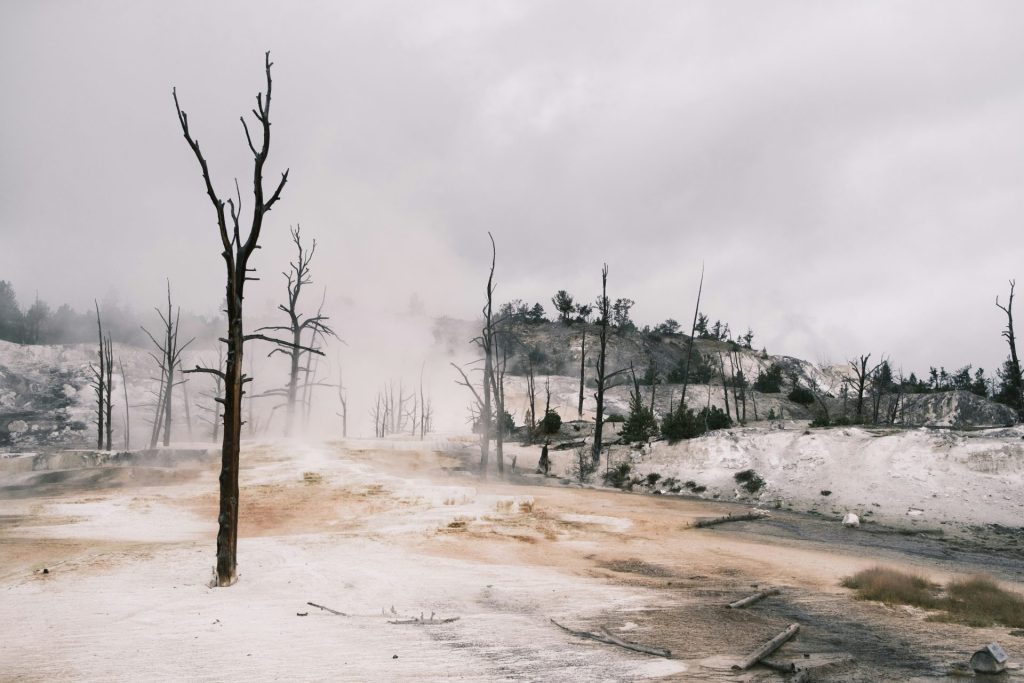
Header image: Photo by Kaitlyn Baker on Unsplash
2026 LEGISLATIVE PREVIEW

Top issues we’re watching this session


THIS YEAR’S LEGISLATIVE SESSION starts Feb. 9, and WOC is gearing up to fight for conservation priorities in Cheyenne. This is a budget session, meaning that lawmakers will be primarily focused on passing a state budget. 

With cuts to federal agencies, assaults on public lands, and conservative lawmakers promising to “DOGE the budget,” it’s more important than ever to speak up for the people of Wyoming and the wild landscapes we cherish. We have been attending interim committee meetings and tracking committee bills all year. Here are the top three items we’ll be watching this legislative session.

1. Wildfire Funding

Lawmakers have been talking about wildfires a lot this year, and they are worried. The state has been experiencing more drought, bigger fires, and extensive beetle kill. And with timber projects behind schedule and unprecedented federal layoffs, there is concern that we won’t have enough personnel to properly respond. 

To address this concern, lawmakers are proposing legislation that would make it possible for more state workers to undertake forestry projects on federal land. So-called Good Neighbor Authority agreements allow the U.S. Forest Service and Bureau of Land Management to rely on state employees when they need extra help with wildfire mitigation and forest health. Currently, there’s a cap on how many Good Neighbor positions are allowed in Wyoming, and there are restrictions on how those positions are funded. This legislation would open the door for more Good Neighbor positions and would make it possible for outside entities, such as nonprofits, to help foot the bill.

The governor’s proposed budget also includes an ask to expand firefighting capacity in the state and to battle annual invasive grasses in fire scars. 

WOC will be supporting these asks.

Photo of snowy hills, with the charred remnants of trees sticking up.
(Photo: Karsten Koehn on Unsplash)

2. NUCLEAR WASTE

Freedom Caucus members are proposing a constitutional amendment that would let citizens decide whether nuclear waste should be stored in the state. Under the proposal, the public would get to vote any time a company wants to store spent nuclear fuel or high-level radioactive waste in Wyoming. 

Adopting this constitutional amendment is a two-step process: First, lawmakers have to approve putting it on the ballot. Then, voters have to adopt it in the November election. 

With the federal government easing nuclear regulations and exempting new experimental reactors from environmental reviews, it’s more important than ever to give Wyoming citizens a voice in the nuclear discussion. WOC is supporting this constitutional amendment as an important step toward consent-based siting.

With the federal government easing nuclear regulations and exempting new experimental reactors from environmental reviews, it’s more important than ever to give Wyoming citizens a voice in the nuclear discussion.

4. ‘DOGE’-ing the Budget

The governor’s proposed budget promises deep cuts but offers little indication where they’ll be coming from. We will work hard to ensure that the Department of Environmental Quality has the funding it needs to protect Wyoming’s air and water quality. We will also push for adequate funding for the Department of State Parks and Cultural Resources, so that it can continue supporting Wyoming communities with educational and recreational opportunities in our state parks.


3. COMMUNITY-VALUED LAND

A proposed bill would enable Wyoming to designate certain state land parcels as having “significant community value” — which could help protect those parcels in the future. If the legislation passes, the Board of Land Commissioners would have to consider the community value whenever they consider proposals to change the use of the land. WOC is supporting this, as it increases the opportunity for public comment on state land-use changes.


5. Corner Crossing

In places where public and private land are laid out in a checkerboard pattern, you often have to step across private land in order to access public land. This is called “corner crossing” — and it remains legal after the U.S. Supreme Court declined to hear an appeal on a corner crossing lawsuit. But Wyoming lawmakers want to shore up the court ruling with a clear state statute. 

A bill drafted by the Travel, Recreation, and Wildlife Committee would do just that, by specifying that corner crossing is not criminal trespass. The legislation would offer more clarity for people who wish to access public lands, and more security for wardens and sheriffs in enforcement. WOC supports this step toward providing protection for those accessing public lands.

Header image: Photo by Pete Alexopoulos on Unsplash
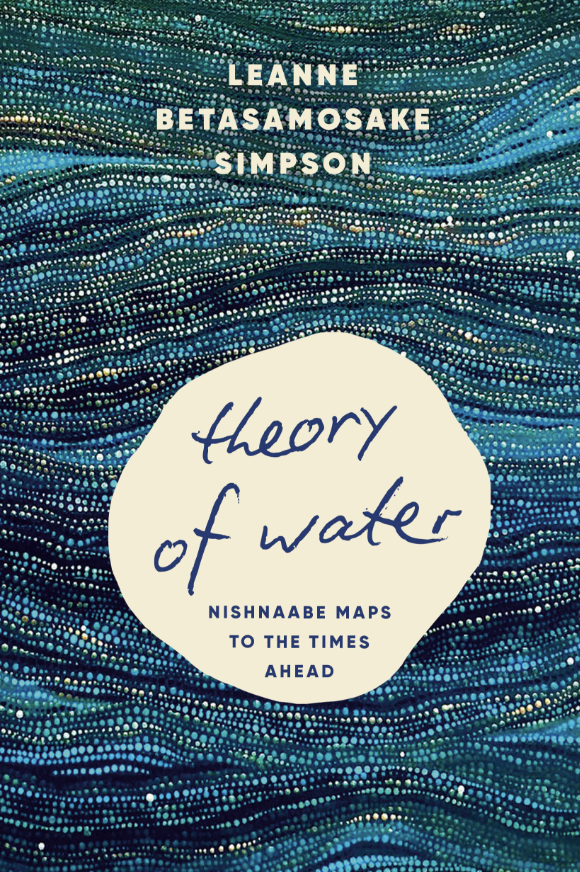
INDIGENOUS BOOKS, MOVIES, AND ARTISTS WE LOVE

Native American Heritage Month is about celebrating living, evolving cultures.

Here’s a list of Indigenous content we at the Wyoming Outdoor Council are reading, watching, and listening to this month and beyond.


BOOKS

MOVIES

MUSICIANS

A reason for hope: Check out our Community Climate Map!

Over the last several months we’ve seen the rollback of programs designed to help Wyoming communities adapt to a changing climate, reduce emissions, lower utility bills, and improve local infrastructure. We’ve also seen targets placed on renewable energy and the very science of climate change.

This news has been difficult to stomach. But there’s reason to be hopeful. That’s because local communities around the state are stepping up to address the challenges ahead.

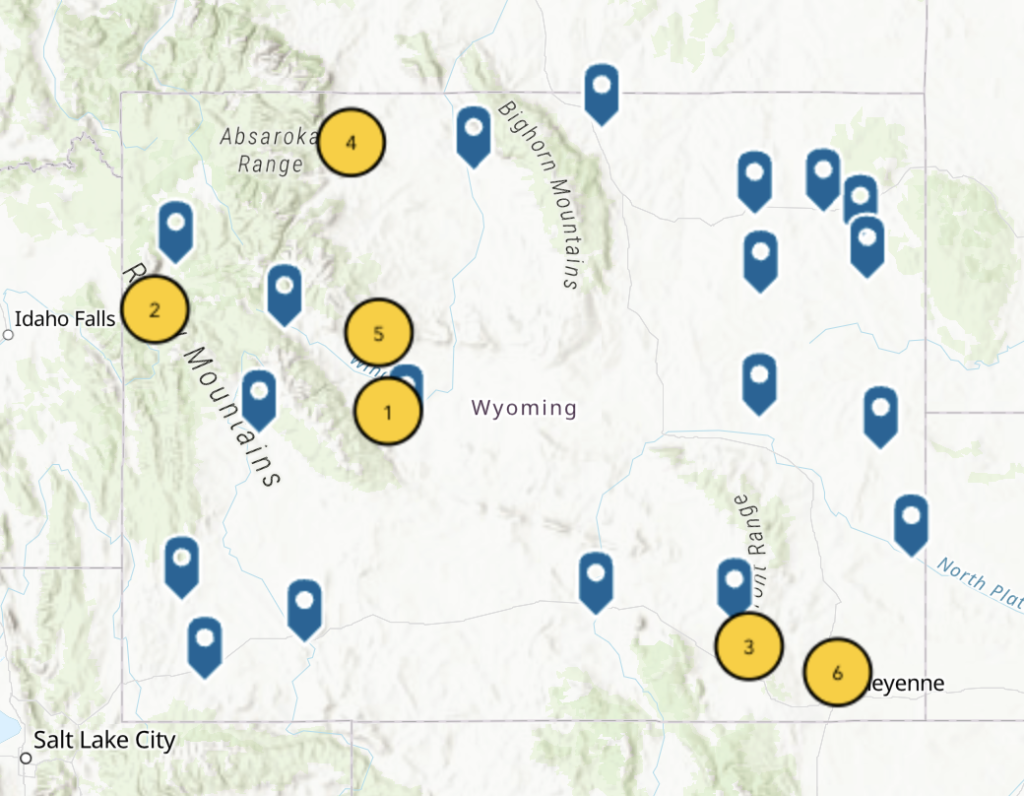
We put together a new Community Climate Map to highlight the work that local Wyoming groups are doing to make their communities more sustainable and resilient. We invite you to take a look around.

The science of climate change is real, and Wyoming is already seeing impacts play out — from more intense fires, to lower snowpack, water scarcity, and worsening air quality.

In the absence of stronger national leadership, now is a critical moment for community-based action. Groups and individuals around the state are already making a difference. They inspire us — and we hope they will inspire you to reach out and get involved in your community.

Not seeing your community on the map, or have questions about how to get more involved? Let us know. Our team is committed to updating this resource and helping you get connected to those on the ground doing the hard work. draft assessment needs.

Image: Russ Schnitzer

THE LAND PAYS THE PRICE


Federal employees are the heartbeat of public lands stewardship.
What happens when they’re gone?


A giant downed tree and wreckage of limbs block the trail. Peggie dePasquale considers the obstacle in thoughtful silence, calculating the angles. Finally she nods. “If we cut here, and get a little lucky, we may be able to roll it off the trail — no need for a second cut.” She pauses to wipe the sweat from her forehead. “But we definitely need to get a little lucky.”

My colleague Gabby Yates and I have joined Peggie here in Wyoming’s Gros Ventre Range — an amorphous group of mountains in designated wilderness between the Continental Divide and the Tetons — to see firsthand what’s happening to public lands as the Trump administration culls the federal workforce. For much of the morning we’ve been inching up a forested ridgeline, stopping frequently to clear deadfall.

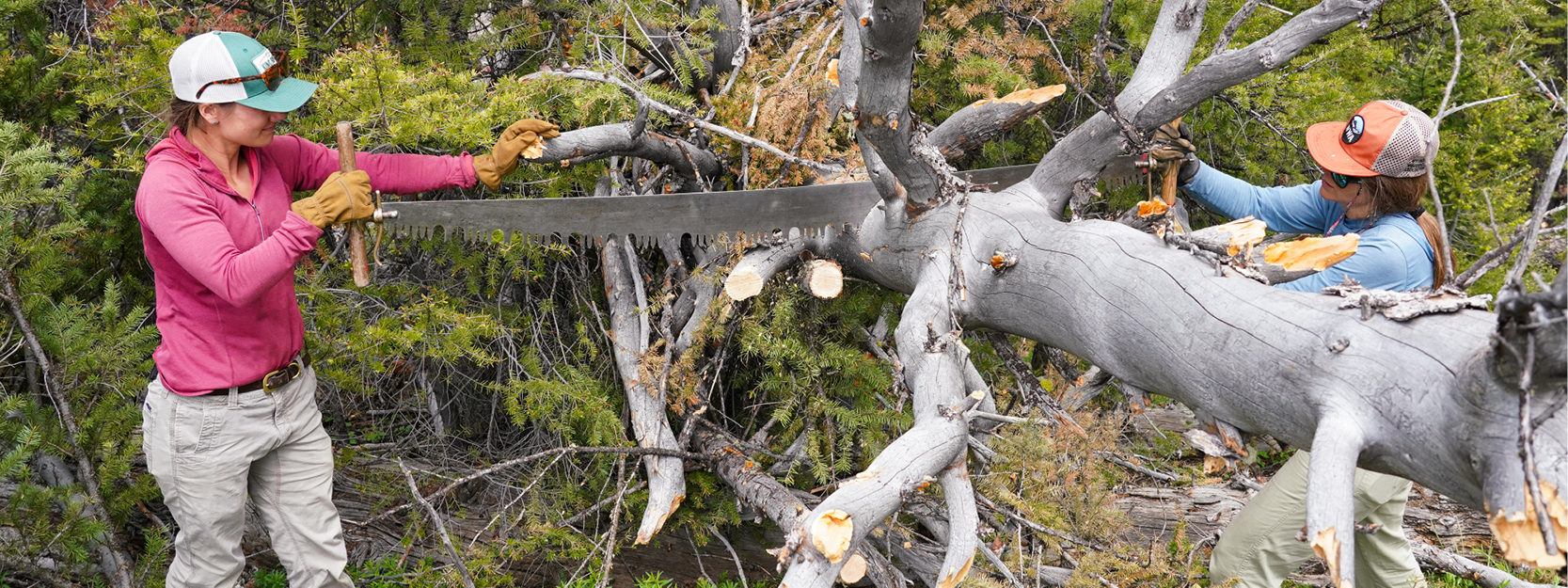
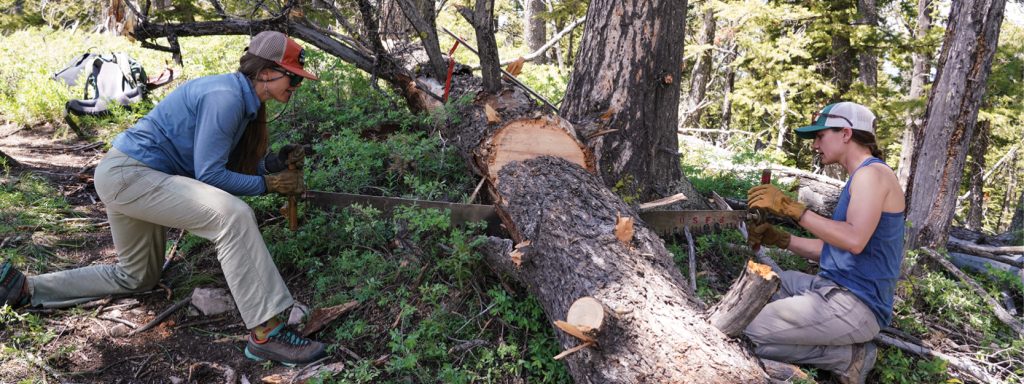
Gabby lops off limbs with the Pulaski, a modified axe, while Peggie and I sever branches with handsaws. Then it’s time for the giant log, and the crosscut saw. The tinny rasp of the five-foot saw, commonly used in wilderness areas where mechanized equipment isn’t allowed, rings through the forest. Fifteen minutes of steady, sweaty back-and-forth later, the log finally splits and crashes to the ground.

Until recently, Peggie roamed this area as a wilderness ranger for the Bridger-Teton National Forest, where she not only did trail upkeep but also collected vital data and educated visitors. But in February, she was terminated from her position, joining thousands of other federal employees suddenly out of work. Now, months later, the cost of having fewer people to steward public lands — people who maintain campgrounds and trails, protect wildlife habitat and cultural resources, manage wildfire risk, and respond to emergencies — is becoming clearer and clearer.

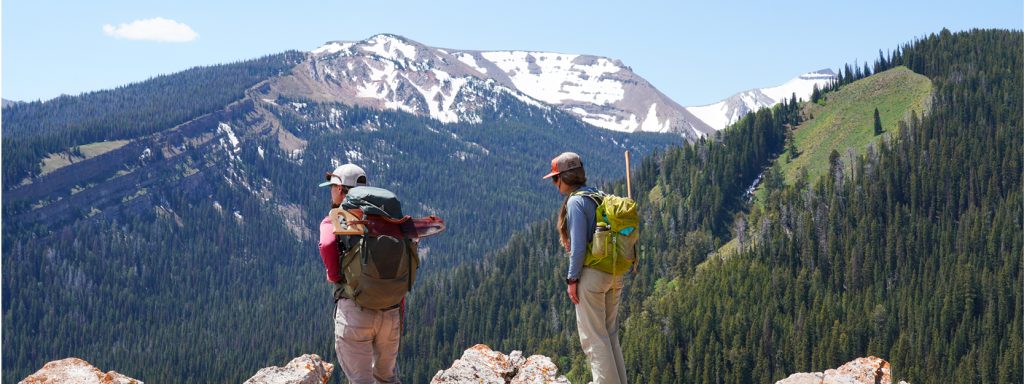
Gabby Yates and Peggie dePasquale pause their trail work to enjoy views of the Gros Ventre Range.

Peggie had worked in and around the Bridger-Teton National Forest for more than a decade, first as a field instructor for the Teton Science School and later as an organizer for the Wyoming Wilderness Association. But she was relatively new to the Forest Service, with just two field seasons as a ranger under her belt.

In late January of this year, while spending the off-season in France for her husband’s job, Peggie received the infamous “Fork in the Road” email pressuring federal employees to resign. She had been looking forward to the upcoming season in the Gros Ventre: Her work plan was finalized, and a promotion to crew lead was on the horizon. Leaving her post was the last thing she wanted. She ignored the email.

But on Valentine’s Day, while skiing with friends, she received a text: The district ranger needed to speak with her immediately.

“I found a way to give them a call and received the news that the leadership at the Jackson district of the Bridger-Teton Forest were instructed as of that morning to terminate all probationary staff based on performance,” Peggie tells us. “Leadership had been given a day to make these calls to people who they wanted, more than anything, to keep on their team. Their hand was forced.” The call was followed up with a letter that said that she had not performed up to par and that’s why they were letting her go, despite her excellent performance reviews.

Peggie was among at least 2,400 Forest Service employees with probationary status (which includes new hires and recently transferred or promoted employees) who were fired that weekend. In the weeks and months that followed, chaos within federal agencies reigned, with further mass layoffs and the shuttering of dozens of federal offices. As of June, in the Forest Service alone, the number of employees fired or who took the government’s “deferred resignation,” a buyout designed to downsize the federal workforce, totaled 7,500 — more than 20 percent of the Forest Service’s workforce.

A month after Peggie was fired, a federal judge ruled some of the layoffs unlawful, and Peggie was told she could return to her post. But by that point, she had already accepted another job offer.

She faced a dilemma: Should she stick with the new position, or return to the job she’d been heartbroken to lose? And if she did return, would she lose the job again just as easily? As one current Bridger-Teton National Forest employee (who asked to remain anonymous for fear of retaliation) described, the atmosphere within the agency for those who remain has been turbulent, in large part due to ever-shifting directives. “Sometimes it seems purposefully chaotic, but I think a fair amount of it is sheer ineptitude,” they said. “In the meantime, agency personnel are getting ping-ponged back and forth with no context, no clarity, and no real actionable direction.”

Ultimately, Peggie decided not to return to the Forest Service, opting instead to stay in the role she’d just accepted: National Forest Wildlands Director for the Wyoming Wilderness Association, her previous employer.


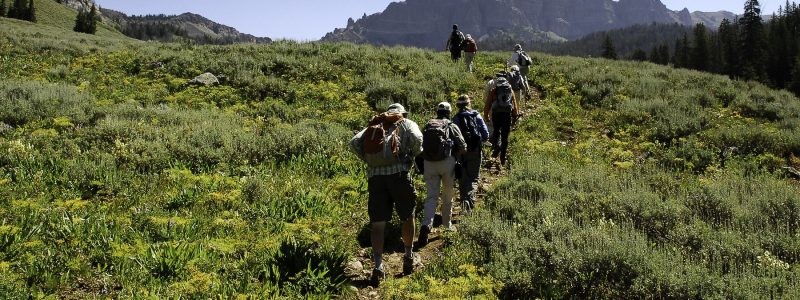
We traverse flower-filled meadows bordered by red rock outcroppings and hike higher into the mountains. Peggie literally wears a different hat now — an orange cap emblazoned with WWA’s logo — and the trail work we’re doing with her today is not part of her typical job duties. But she’s the kind of person who can’t visit the forest without pitching in: When Gabby and I asked her to show us around, there was never any question that we’d load up the saws.

As we hike, Peggie points out examples of the work she and her former colleagues did here in past years. Some, like the sturdy bridges that span creeks and streams, are obvious displays of labor. Others, like the drainage ditches dug to mitigate rutted trails, are less obvious. Peggie shares that because of staffing cuts, it’s unlikely that a Forest Service crew will make it to this trail this year — meaning the hard work that keeps trails accessible and safe just won’t happen.

Rutted trails and deadfall may seem like a minor inconvenience for many visitors. But for others, like horsepacking outfitters, the impacts can be far greater. “There are people that rely on these trails for their livelihood, and who don’t necessarily have the capacity in the pre-season to spend whole days clearing trail,” my colleague Gabby, who has a background leading horsepacking trips, explains. And with fewer Forest Service staff, the backlog of trails that need clearing will continue to grow.

The impacts of staffing cuts don’t stop with unmaintained trails. Fewer backcountry crews means less data on wilderness visitorship, which forest managers use to make sound management decisions. Cuts have also halted studies of invasive weeds, which Peggie says represent one of the most pressing threats to the Gros Ventre. “At the end of last year, we were working with our GIS specialists to create a survey that would allow us to track infestations,” she shares. From there, managers would work with an invasive species specialist to find a solution. “But now, a program that had so much potential and energy and enthusiasm is just no longer.”

Then of course there’s wildfire: Wilderness crews, like the crew Peggie was on, reduce fire risk by educating visitors about campfire safety, ensuring campfires are properly extinguished, and reporting newly started blazes in the backcountry. Other Forest Service employees play vital roles, too. Without adequate staff for fuels mitigation or trail maintenance, catastrophic burns are more likely, and firefighting personnel may struggle to get where they need to go. Without administrative staff, fire crews face travel delays. And with fewer support staff trained to aid in fires — red card carriers — crews on the frontlines carry a heavier burden.


The Bridger-Teton National Forest, though it encompasses an enormous 3.4 million acres, represents only a fraction of the 30 million acres of federally managed public lands in Wyoming — nearly half the state. I ask Gabby, who is in charge of the public lands program at the Wyoming Outdoor Council, how the impacts from layoffs that we’re seeing here fit into the larger picture of public lands across the state and the West.

She says she’s less worried about unmaintained trails or bathrooms and more concerned with, “What’s going to happen to these ecosystems? We’re talking about wildlife resources. We’re talking about watershed resources. If there’s no one there to manage these issues, the problems we have are just going to be exacerbated.”

Indiscriminate firings of land stewards are a devious part of a much larger effort to transfer public lands to state control, Gabby continues. “With these layoffs, there’s a slippery slope: If we’re not properly staffing these places, we’re not properly managing them, and when that occurs, they become more of a liability than an asset, and there’s more of an excuse to sell them off.”

Although the push for public lands transfer has a long history, it was brought into sharp focus this summer, when Congress tried to include the sale of millions of acres in the federal budget reconciliation bill. If there’s anything to learn from the past, it’s that transfer of public lands to states is a direct pathway to sale and privatization, as states eventually realize they have nowhere near the resources needed to manage lands, let alone turn a profit.

If there’s anything else to be learned, it’s how fervently Americans want to see their public lands protected, not sold off. With the recent sell-off attempts in Congress, for example, the backlash was swift and enormous, and showed just how disconnected many politicians are from the lands they seek to sell off. “Decision makers aren’t seeing places that people care about, or rely on for clean water, or cultural values, or recreation,” Gabby says. “They’re seeing something that you can extract value from.”

Places like the Gros Ventre are ground zero for such attempts: It’s Forest Service land that doesn’t have the recognition of, say, a national park, and therefore means little to distant politicians. Yet for those nearby — people like Peggie, Gabby, and countless others — such places are more than just land. They’re cherished parts of their backyards, places whose true value defies measurement.

Clearing trails is difficult, time-consuming work. With fewer Forest Service employees, the backlog of trails in need of maintenance is growing.

We clear tree after tree as the heat of the afternoon builds. Peggie patiently explains to Gabby how to avoid getting the crosscut saw stuck; she hands me the axe and tells me to enjoy some “wilderness therapy.” The work feels good, and the results are immediately tangible — one of the things Peggie loved most about this work.

On a small scale, there’s no doubt we’re making a difference. And we’re not the only ones, either: From individuals to organizations, there’s no shortage of people stepping up to fill the gaps left over from staffing cuts. The Friends of the Bridger-Teton, for example, recently launched the FBT Forest Corps, an initiative that lends a hand on vital trail infrastructure projects. WWA, Peggie’s organization, helps fund this new initiative, and also regularly trains volunteers to conduct solitude monitoring surveys that would otherwise go undone.

On the other hand, Peggie is clear that our work today is but a drop in the bucket. Nothing, she says, can replace the work done by a full wilderness crew.

“… Our work today is but a drop in the bucket. Nothing can replace
the work done by a full wilderness crew.

— Peggie dePasquale

We stay past our agreed-upon turnaround time to clear one last log. Finally, though, we turn our backs on whatever awaits up the trail and begin the hike down.

Our talk turns to what gives us hope, for the Gros Ventre and places like it. “For me, it’s the community of people who care for wild places,” Peggie says. “Which is interesting — this idea that it’s people who are bringing us to this point of conflict, and it’s also people who give us hope that we’re capable of finding a solution.”

As we pass the wooden sign marking the wilderness boundary, Peggie gives it a pat like it’s an old friend. With it, she seems to say goodbye. And — I’ll be back.


TOGETHER, WE’RE GIVING SUBLETTE PRONGHORN A PATH FORWARD

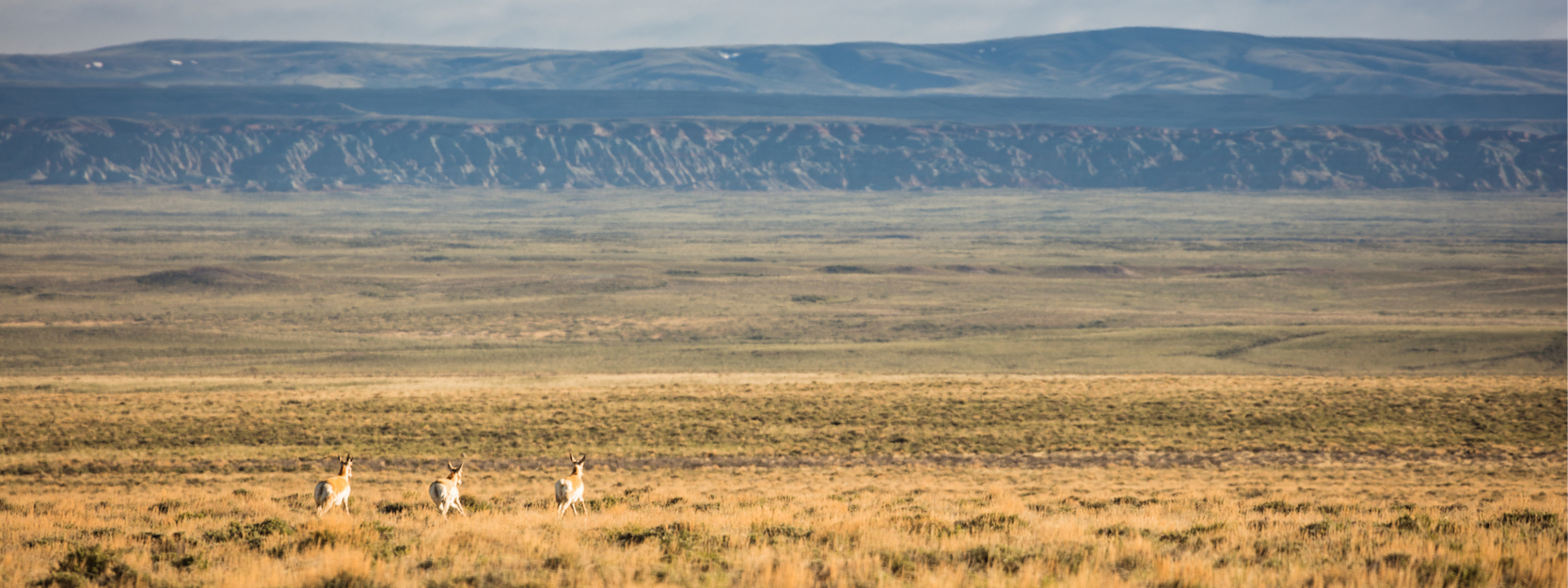
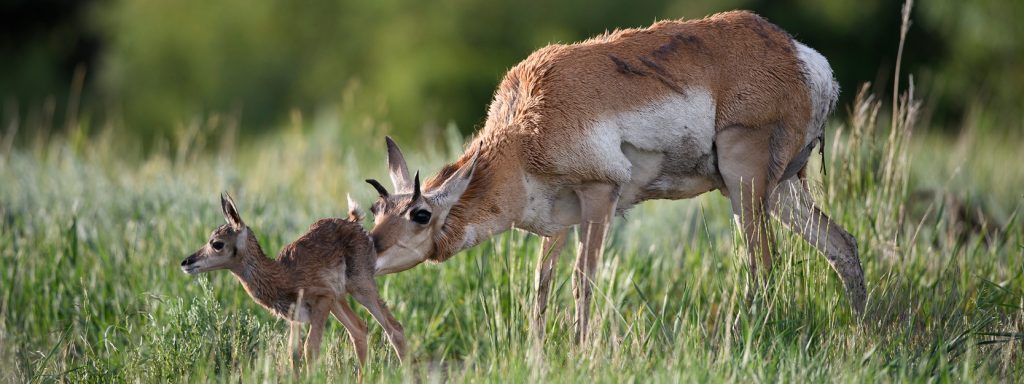
For millennia, Sublette Pronghorn have traveled the same time-worn migratory pathways, moving from Wyoming’s Green River Basin to lush summer ranges as far north as the Tetons. But in just the past 150 years, their journey has faced growing threats — from population crashes and barbed wire fences to energy development and rural subdivisions. Without bold and timely action, one of North America’s most iconic migrations could disappear.

Formally designating this migration corridor is the critical step needed to ensure its long-term survival. Now, after decades of research, years of prep work, and a dash of delays along the way, Wyoming is finally on the cusp of designating its first pronghorn migration corridor.

The recent public comment period, which closed earlier this month, was the last meaningful opportunity for people to voice support for conserving the Sublette Pronghorn migration corridor. Those of us at the Wyoming Outdoor Council set out to encourage as much public engagement in the process as possible, to make sure decisionmakers heard overwhelming support for designation.

Well, you all showed up in force: At events around the state and online, more than 270 people took the time to comment, far exceeding our expectations. At this point, all we can say is thank you. Thank you for standing up for Wyoming’s pronghorn and making it clear just how much this migration corridor means to you.

The truth is, resounding public support for designation could tip the scales for this corridor. In July, when the Wyoming Game and Fish Commission meets to vote on whether or not to recommend designation to Gov. Mark Gordon, we know there will be testimony that questions the need for full protections. But thanks to you, we are on a firmer footing to hold strong against efforts to disregard the data and pick the corridor apart.

The fight is far from over, but we can feel good knowing that we’ve made it easier for state officials to do the right thing for Sublette Pronghorn.

Truthfully though, the sheer volume of public comments is only one part of the story. It was an absolute joy to meet with people online and across Wyoming to talk about migration and hear how much the Sublette herd means to so many of you. We heard so many wonderful stories about how Sublette Pronghorn have touched, and continue to touch, your lives. Especially during a time that can feel scary and overwhelming at the national level, it has been indescribably uplifting to join with so many of you in the common cause of protecting Wyoming’s wildlife.

As the July Game and Fish Commission meeting approaches, we will continue doing everything we can to ensure these pronghorn can carry out the long-distance migration they depend on. Thank you for fueling this effort — and for inspiring a renewed collective commitment to Sublette Pronghorn.

MEGHAN RILEY
Wildlife Program Manager
meghan@wyomingoutdoorcouncil.org

Springing into action: Fighting to fund Wyoming communities

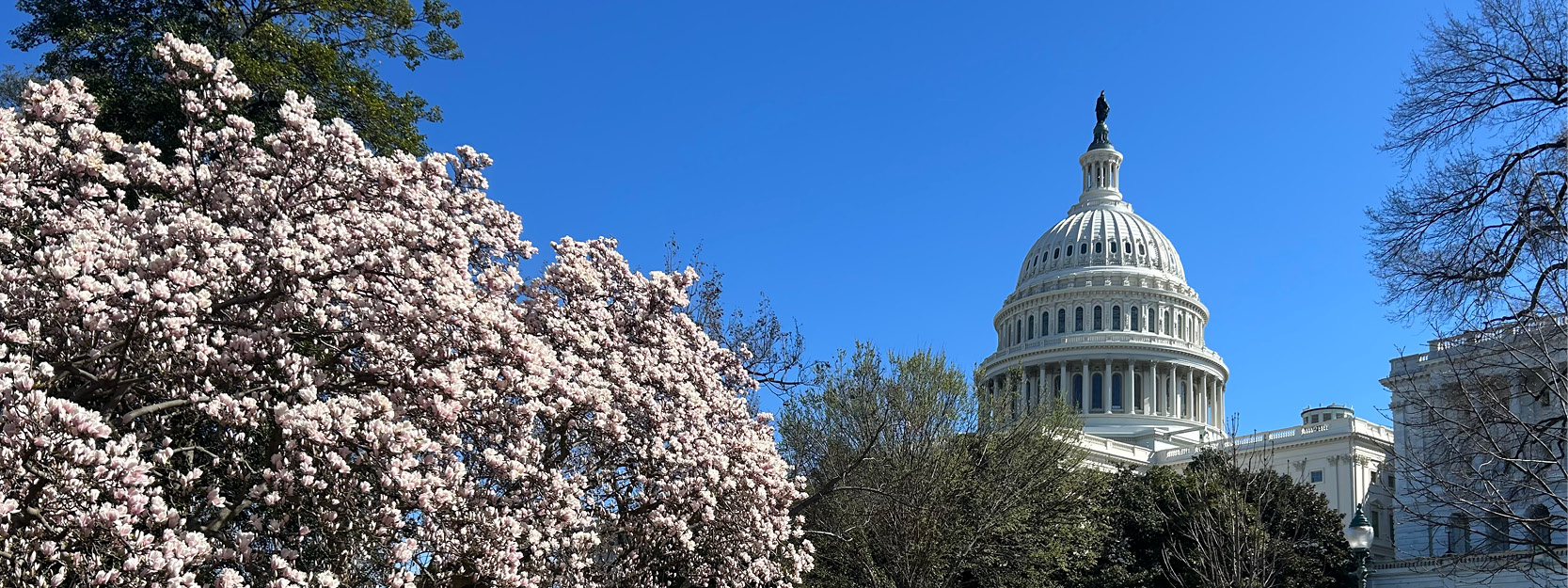
On March 25, Big Wind Carpenter and I took off from a small Wyoming airport, bound for our nation’s capital, Washington, D.C. As we landed, the city was blanketed in the pink and white blossoms of cherry trees — an unmistakable sign of spring. While the season’s beauty filled us with optimism and a sense of hope, the urgency of our mission and the uncertainty facing Wyoming’s communities stood in stark contrast to the otherwise picturesque scene.

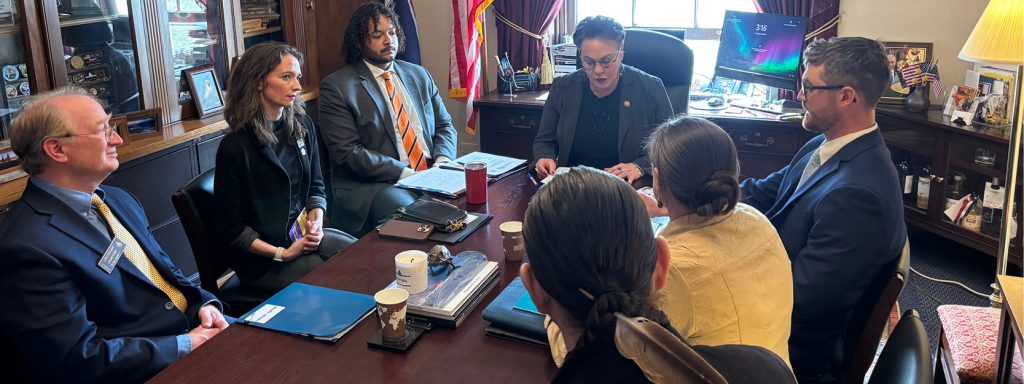
We were joined by elected officials from across Wyoming, city leaders, and union representatives to advocate for essential federal funding opportunities with our state’s congressional delegation. 

Our goal in D.C. was to fight for the projects and programs that Wyoming communities, Tribes, and businesses are counting on — ones that promote energy efficiency and clean energy, that Wyomingites had vetted, and that were in the pipeline to be rolled out across the state. We spoke out in favor of programs like Home Energy Rebates, Solar for All, and Tribal Electrification, which collectively represent over $110 million in previously approved grant funding. These funds would help Wyoming’s low-income households afford rising electricity costs and make necessary home improvements — benefitting over 41 percent of Wyoming households

Sadly, the future of these programs is now uncertain.

We also spoke in support of other long-standing programs that could be lost. The Rural Energy for America Program is one, which helps small rural businesses and agricultural producers lower operating costs through investing in energy efficiency and clean energy projects. Likewise, Investment Tax Credit and Direct Pay helps lower up-front costs for residents, local governments, schools, and businesses to afford their own rooftop solar or renewable projects. Finally, we fought for continued investment in public safety and quality of life, which makes local infrastructure more resilient to flooding and natural disasters, creates more walkable communities with safe routes to schools, and enhances occupational safety for Wyomingites working in mines.  

Our presence was about more than policy — it was about real people and real projects. We were there to highlight the direct impacts recent federal decisions will have on our state and its people, and make sure that Wyoming voices are heard during the fast-tracked decision-making that has been largely absent of public input. 

For months, our phones at the Wyoming Outdoor Council have been ringing off the hook. Community members have been asking which programs have been cut. Were the ones that help low-income residents afford their utility bills, like the low-income energy assistance program, now gone? Small business owners are worried about not receiving the federal grant portion for projects already underway. Tribal program employees are facing stalled infrastructure plans. 

The message we’ve heard is clear: these funding cuts are hurting our communities. Yet, despite these challenges, hundreds of millions in federal funds have been frozen, and Congress is now considering further cuts to these vital programs — to fund tax breaks that overwhelmingly benefit corporations and the wealthy, leaving Wyoming residents to bear the cost.

In our meetings with Sen. John Barrasso, Rep. Harriet Hageman, and the staff of Sen. Cynthia Lummis, we emphasized how one-time investments, like these programs, could significantly benefit our communities. We shared how federal funding is an investment that furthers local priorities by: saving money, diversifying economies, creating jobs, and improving critical infrastructure. We worked to translate these ideas into real, on-the-ground impacts by showing how federal grants provide a pathway to bring federal tax dollars back to Wyoming by reinvesting them in our communities.

We also thanked the delegation for taking the initiative in recent years to better equip communities, Tribes, and businesses in securing federal grants — they helped host Wyoming’s Federal Funding Summits alongside the governor, and worked to integrate Wyoming’s new Grants Management Office. Because of these resources, Wyoming communities are now better positioned to compete with other states for federal funds and our workforce is more competitive. 

Our meetings in D.C. weren’t without their challenges, however. We faced resistance on issues that seemed more tied to national-level talking points than what is actually going on in Wyoming communities. 

This only reinforced a crucial point: while we brought the stories of Wyoming’s residents to D.C., our fight isn’t over yet.

Now that we’re back home in Wyoming, the fight continues. Your voices are more critical than ever. With the support of your calls and letters, WOC was able to take one more step in advocating for the programs that matter to you. But it’s still you — Wyoming’s ranchers, business owners, tribal members, and everyday citizens — who have the most powerful voice. Directly communicating with our elected officials and sharing your personal experiences and concerns will make the real impact. 

Right now, Congress is actively working on a budget reconciliation process where these programs could be on the chopping block. House leadership shared their aspirations to have a new budget signed by President Trump by as early as May 26. That means, the time to act is now — and fast.

These federal funding opportunities are more than just figures on a spreadsheet; they are a direct investment in the hopes and dreams of Wyoming’s future, and you and your neighbors. These programs help move our communities towards having healthier air to breathe, clean water to drink, resilient infrastructure, and thriving local economies. Let’s not forget that spring is a time for new growth and new beginnings. Together, we can work hard to secure a future where Wyoming thrives.

MEGHAN RILEY
Wildlife Program Manager
meghan@wyomingoutdoorcouncil.org

A Message from the Director: Federal firings will impact Wyoming’s lands, waters, wildlife, and communities

The public lands that define Wyoming and contribute significantly to our quality of life are under unprecedented and nuanced attacks. State legislative efforts to transfer our public lands to the state compounded by federal efforts to sell them off to seed a sovereign wealth fund are suddenly on the table. Of course, there have been thoughtless and drastic cuts to the federal workforce that will affect wildfire response, road and campground openings, trail work and delay important landscape health and public access projects. The Wyoming Outdoor Council is shocked and dismayed by the firings of so many public servants, and these losses will have very real consequences for the land, water, air, and wildlife we were founded to protect. Beyond these impacts, we are very concerned about how these losses will affect our fellow Wyomingites. It’s easy to paint with a broad brush the federal worker, but it is important to note that these civil servants are our neighbors, the parents of our kids’ friends, the people we talk to at the grocery store. We find it particularly abhorrent to celebrate how these people’s lives have been impacted.

There’s no question that there are inefficiencies and disagreements between people, organizations, businesses, tribes, and governments (to name a few) about how the government functions. But as an organization, we work to separate those differences in policy, management, funding, and decision-making from the individual persons tasked with those duties. To be clear, firing the federal workforce does little, if anything, to address concerns of fraud, waste, and abuse. With approximately 350 million people living in this country, there’s certainly a lot that differentiates us: hopes, dreams, and the lived experiences that form who we are as we all try to do the best we can with what we have and for who is in our orbit. At WOC, we believe our land, air, water, wildlife, and grappling with the realities of climate, unite us. Some of our best memories with family, friends, or by our lonesome took place in the Wyoming landscape.

It is for these values and every person in Wyoming that the WOC team shows up every day, works to engage agencies, leaders, and the people of Wyoming in pursuit of doing and being better. We care about your jobs, about your hardships, about the obstacles and opportunities life presents you with — it doesn’t matter if it is in the public or private sector, or what that job or passion is. In our efforts to understand, we help the rest of Wyoming understand, too. The WOC community, our staff, board, members, partners, and volunteers are not a monolith —nor are federal, state, or industry workers. When divergent ideas and experiences come together, we see it as a strength, not a weakness — and it is hard work and we’re here for it. Join or engage with us to build our collective strength for what truly matters in Wyoming.

Stay tuned for important updates and actions on this and many other matters. Thank you for your attention, compassion, and support – onward!

Carl Fisher, Executive Director

Image: Meghan Riley

Creating easy passage for wildlife: volunteers modify fences during Stewardship Day

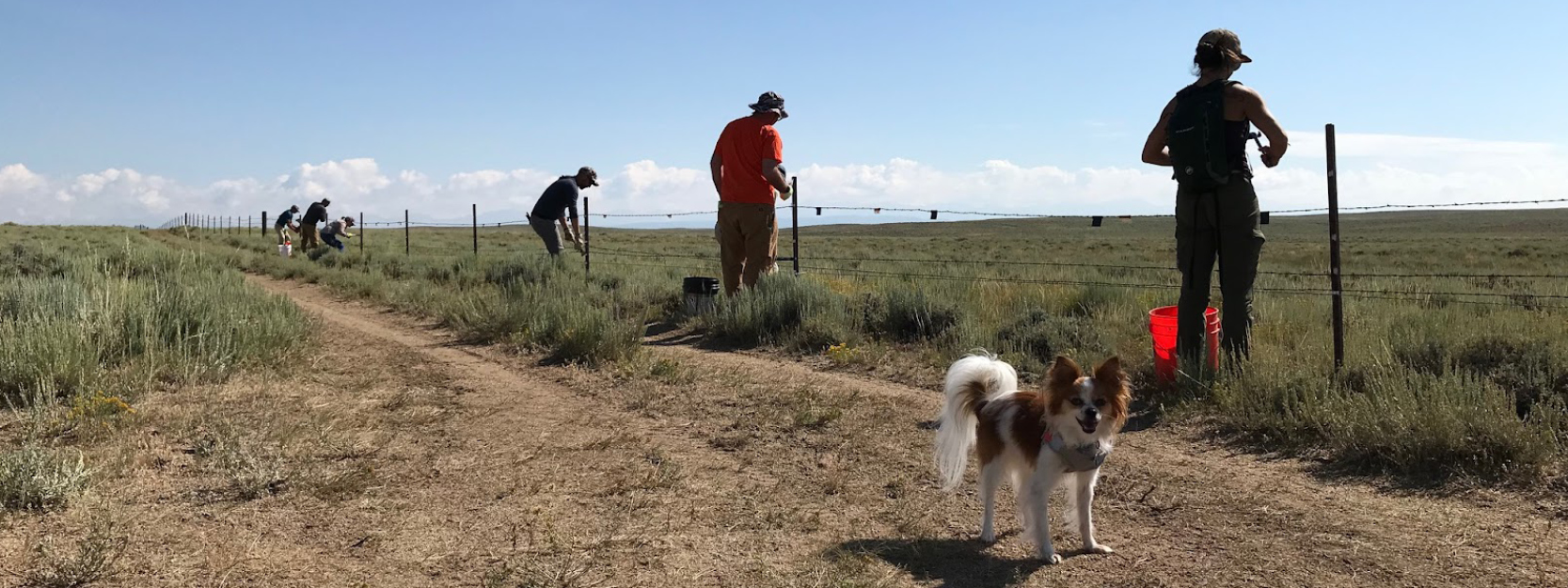
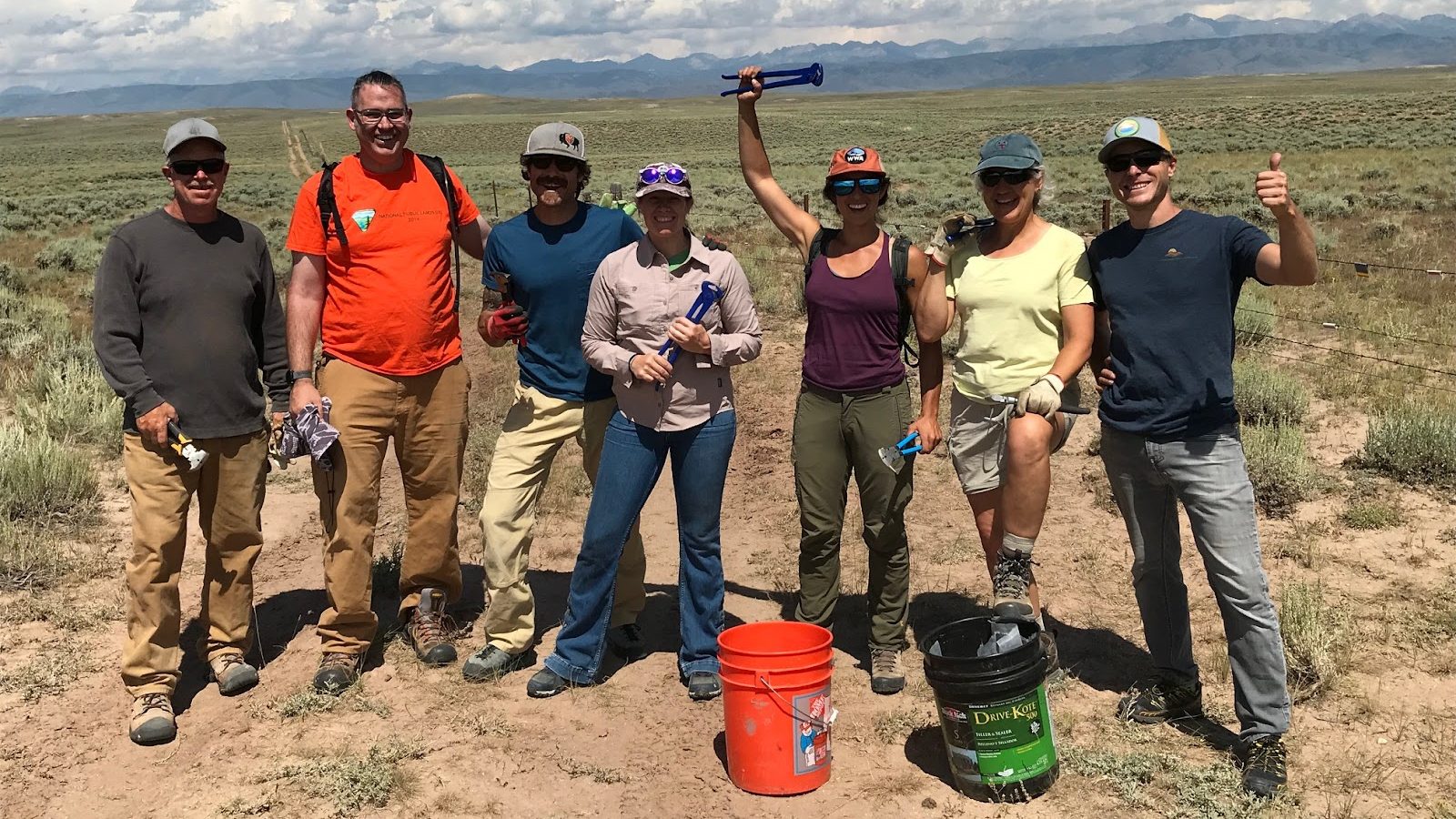
IN A FUN EFFORT TO HELP LOCAL WILDLIFE HABITAT, the Wyoming Outdoor Council teamed up with the Wyoming Wilderness Association and the Bureau of Land Management to host a volunteer stewardship day to improve over a mile and a half of fencing in the Big Sandy foothills outside Boulder, Wyoming. This fence modification project, led by BLM sage-grouse specialist Nate Fronk, offers critical changes to traditional fencing so that pronghorn, mule deer, and Greater sage-grouse can safely pass unharmed. Alongside staff from WOC, WWA, and BLM, six Wyomingites volunteered their Saturday to make this landscape a better place.

Traditional fencing across Wyoming is composed of four barb-wire rows, with the top line at 50 inches and the bottom at 12 inches. Studies show that sage-grouse fly at 50 inches on average, and often collide with the top fence wire, which is a significant contributor to sage-grouse fatalities in the area. Mule deer also have a difficult time jumping over fencing at that height, and pronghorn struggle to duck underneath the bottom line.

Luckily, a few simple alterations can turn this cumbersome barrier into an easy passage. The bottom barb-wire line is replaced with a smooth wire and raised to 18 inches, allowing pronghorn to duck underneath without injury. The top wire is lowered to 40 inches, which dramatically reduces sage grouse fatalities and makes it easier for mule deer to jump over it. While these minor modifications have a huge benefit to local wildlife, it does not compromise any functionality in keeping cattle and livestock where they’re supposed to be.

This is a great example of simple solutions that have a huge impact, making our ecosystems healthier while still serving the needs of our livestock and grazing industries. Thanks to the good work of volunteers, this stretch of fence will no longer endanger our beloved wildlife.

The Wyoming Outdoor Council is always looking for volunteers to help improve our public lands and wildlife habitat. If you’re interested in helping out on a stewardship day or other project, please sign up to receive updates to learn about how you can help maintain Wyoming’s environment and quality of life for future generations.


Get ready to vote! Wyoming’s general election is Nov. 8. 

At all levels of government, elected officials in Wyoming make daily decisions that impact our public lands, wildlife, climate, and communities — now and for future generations. And while big-ticket national races tend to get most of the attention, you’re more likely to be directly affected by the work of your local state legislator or county commissioner. 

On Tuesday, Nov. 8, make sure your values are being represented by heading to the polls for Election Day. 

Here’s what you need to know if you’re voting in Wyoming’s 2022 general election: 

  • Double check your polling place. It may have changed recently, or could have been temporarily relocated in 2020 due to the pandemic. CHECK HERE 
  • Bring your ID. Wyoming voters are now required to show a valid form of identification when voting. State, Tribal, military, and Wyoming student ID cards are all acceptable. LEARN MORE
  • Register to vote. You can register at your polling place on Election Day and vote immediately. A poll worker will make sure your registration is up to date. Again, just remember to bring your ID. 
  • Deliver your absentee ballot before polls close. Absentee ballots must be received before the polls close or they will not be counted. If you haven’t mailed your absentee ballot already, you can drop it off in person at your county clerk’s office or designated drop box before polls close at 7 p.m. Tuesday, Nov. 8. 

Now’s a great time to make a plan to vote and put a reminder on your calendar. For answers to any questions about participating in the election, visit letsvotewyo.org or contact your county clerk’s office. 

Thanks for voting!