UNTIL RECENTLY, electric-vehicle drivers in Wyoming faced triple taxation. They had to purchase an annual EV decal for $200 a year, they paid an Alternative Fuel Tax at charging stations (similar to a gas tax), and they paid sales tax on electricity. This triple taxation was not only unfair to drivers — it also caused some public charging stations to go offline, which is problematic in a state where charging infrastructure is sparse.
A new law makes the system fairer for Wyoming EV drivers, reduces red tape for charging stations, and ensures that out-of-state visitors pay their fair share to maintain roadways.
FAQ
I live in Wyoming and own an electric vehicle. What taxes will I have to pay now?
You will still need to pay an annual Electric Vehicle decal fee, but the price has been cut in half, from $200 to $100.
You will also pay the Alternative Fuel Tax (3.5 centers per kilowatt-hour), but only at high-speed (Level 3) public charging stations. This tax is roughly equivalent to Wyoming’s gas tax.
You do not have to pay sales tax at high-speed chargers. Gasoline and diesel are also exempt from sales tax at the pump, so this puts them on a level playing field.
What are the different ways electric vehicles can charge?
There are 3 primary ways for an electric vehicle to charge.
Level 1: Charging using a regular home outlet—the same type you would plug a cell phone into. Some EV owners rely exclusively on Level 1 charging, especially if they drive less than 40 miles per day, but it can take days to fully recharge a vehicle.
Level 2: Charging using a dedicated high-power outlet—the same type used for a home dryer or oven. Level 2 chargers can recharge a car overnight (6–10 hours). Homeowners frequently install them, and they are also often available at public locations such as workplaces, downtown shopping districts, car dealerships, and hotels, often as an amenity to attract visitors.
Level 3: These high-speed chargers work more like traditional gas pumps for long-distance travel. They are more complicated than what you can install at home, but they’re super fast: They can fully charge an EV in 20–30 minutes.
What if I own a plug-in hybrid vehicle?
Under the new law, owners of plug-in hybrid vehicles (PHEVs) will need to purchase an annual EV decal, which costs $50 per year. PHEV owners pay less than full EVs because their vehicles run on both electricity and gasoline. While they may charge at home, they also pay the state’s fuel tax when filling up with gasoline.
How do the taxes on EVs compare with the taxes that conventional drivers pay at the pump?
The Alternative Fuel Tax closely matches the state’s fuel tax of 24 cents per gallon.
When electric vehicles are driven long distances in the state, their owners pay the Alternative Fuel Tax at high-speed charging stations. This system works much like paying fuel tax when you buy gas—the more you drive, the more you pay. However, because many EV owners also charge at home or at Level 2 stations that are exempt from the Alternative Fuel Tax, they pay an annual EV decal fee to help make up for that loss of fuel tax revenue. This fee was designed to be as fair as possible and takes into account factors such as efficiency differences between gas and electric vehicles, expected miles traveled, and other considerations.
Bottom line: If you own an EV, you can generally expect to pay about the same amount per year as drivers of conventional vehicles.
How will Wyoming have the money to maintain roads if EV drivers are paying less in taxes?
Wyoming’s Department of Transportation could actually collect more revenue under the new law, because out-of-state drivers will start paying their fair share. Historically, out-of-state EV drivers were not taxed at all when driving through Wyoming. More recently, they’ve paid a modest tax, but it’s been very low. Now, they will pay 3.5 cents per kilowatt-hour at high-speed public charging stations, which is commensurate with gas tax.
Big picture, this law levels the playing field between gas and electric vehicles and will be good for Wyoming’s economy.
I’m the manager of a business, and we offer public charging as a perk for our patrons. How will the new law affect us?
Under the new law, Level 2 charging stations are exempt from licensing requirements and will no longer have to pay the Alternative Fuels Tax. In Wyoming, laws generally go into effect on July 1 of the year in which they are enacted, so you should continue to track electricity and submit payments until WYDOT provides additional guidance or updates.
If you run a Level 3 charger, you will need to be licensed and pay the Alternative Fuels Tax.
I heard the old tax system caused a bunch of EV charging stations to shut down. Why was that? Will those charging stations come back online now?
Under the old system, a number of Level 2 charging stations were removed from public access, due to administrative and financial burdens. Unlike gas stations, Level 2 EV charging in Wyoming is offered by a range of entities, from hotels to local businesses to car dealerships. In most instances, EV charging is not their primary business; it’s something they offer as a perk or a way to attract visitors.
Prior to now, there was so much red tape to navigate in order to comply with the state’s tax laws that some of these businesses decided it wasn’t worth it to continue offering public charging. Many smaller, low-speed charging stations didn’t even have a way to track the amount of electricity their patrons were using. We expect some of these stations to come back online once the new law takes effect, but there is a chance that some locations may have permanently decommissioned their chargers. If you are unsure of a station’s status, you can call ahead or check the PlugShare website.
I don’t own an electric vehicle. How does this impact me?
You can rest assured that both out-of-state and Wyoming EV and PHEV drivers are paying their fair share of road use taxes and fees. You can also be confident that those who choose to go electric will not be penalized for their decision.
Big picture, this law levels the playing field between gas and electric vehicles and will be good for Wyoming’s economy. Removing red tape will make it easier for charging infrastructure to expand, which will help residents and visitors alike travel around the state with ease. As more people switch to electric vehicles, better charging infrastructure and fairer taxes will keep Wyoming open for business, regardless of what people drive.
The momentum is continuing in Cheyenne! Despite one legislative setback, several good bills are moving forward. Here’s what you need to know from the past week.
PUBLIC LANDS BILL MOVES FORWARD
An excellent public lands resolution has cleared important legislative hurdles this week. SJ9, which states that Wyoming opposes the indiscriminate sale of public lands, passed unanimously in Committee and has now made it through two readings on the Senate floor. It will be heard once more in the Senate before going to the House.
While not legally binding, the resolution would send an important message that public lands are invaluable to Wyoming and should remain in public hands. Help get this bill to the next step by contacting your Senator today and telling them to vote YES on SJ9!
A bill that would right-size taxes for electric vehicle owners is moving forward.The current tax system subjects Wyoming EV drivers to triple taxation and is causing public charging stations to shut down. HB145 would make the system fairer for drivers and reduce red tape for charging stations — while still providing the state with revenue for road maintenance.
The bill passed the House Transportation Committee with full support — even WYDOT came out to speak in favor of it! — and has passed the first two readings on the House floor. It will be heard once more in the House before going to the Senate.
BACKYARD SOLAR DIES
Sadly, a bill that would have allowed Wyomingites to use “plug-in” solar panels has died. Plug-in solar, which is gaining popularity in other states, involves small panels that you plug directly into your home outlets. HB146 would have allowed Wyomingites to use this technology without going through a costly permitting process.
While the bill has died, lawmakers are planning to revisit the idea in the interim — i.e. after this year’s legislative session wraps up — so there’s a chance it could be back on the table in 2027.
TAX BREAK FOR GAME & FISH
The Game & Fish Department is the only state agency that pays property taxes on their offices. A proposed bill, which WOC is supporting, would exempt them from paying taxes on their headquarters and regional office buildings. This would save the agency approximately $500,000 per year, at a time when costs are rising. The bill has passed first reading in the Senate. It will be heard twice more before going to the House for consideration.
Several pieces of conservation-friendly legislation have been introduced in Cheyenne this week — thanks, in part, to your help! Here’s a rundown of what we’re watching.
PUBLIC LANDS: NOT FOR SALE?
A group of lawmakers from both the House and Senate are hoping to make one thing clear: Wyoming does not support the transfer or sale of public lands. Thirty-nine lawmakers, led by Sen. Eric Barlow of Gillette, have sponsored a resolution saying public lands are essential to Wyoming livelihoods and heritage and that they should remain in public hands. The Senate voted overwhelmingly to introduce the bill.
This is cause for celebration! The resolution would not carry legal weight, but it would be an incredible message to Wyomingites that local communities deserve a voice in how public lands are managed. If adopted, it would be sent to President Trump and Congress. It now heads to the Judiciary Committee.
BACKYARD SOLAR
Thanks to your help, lawmakers have introduced a bill that would give Wyoming residents a simple, affordable way to lower their electricity bills. HB146 would enable residents to use “plug-in” solar panels, which are small panels that you plug directly into your home outlet, without having to go through a costly permitting process. This is an exciting bill, and plug-in solar is a relatively new development in the solar industry that many states are starting to adopt to help residents address increasing electricity costs.
The bill will be heard by the House Transportation Committee on Tuesday, Feb. 17 at noon, and we need your help supporting it!
To testify in person: Simply show up to the Capitol on Feb. 17.
To testify on Zoom: 1. Visit the “Legislative meetings” page on Monday, Feb. 16* 2. Find the House Transportation Committee. 3. Click the “testify” button.
* You can’t sign up until Feb. 16…
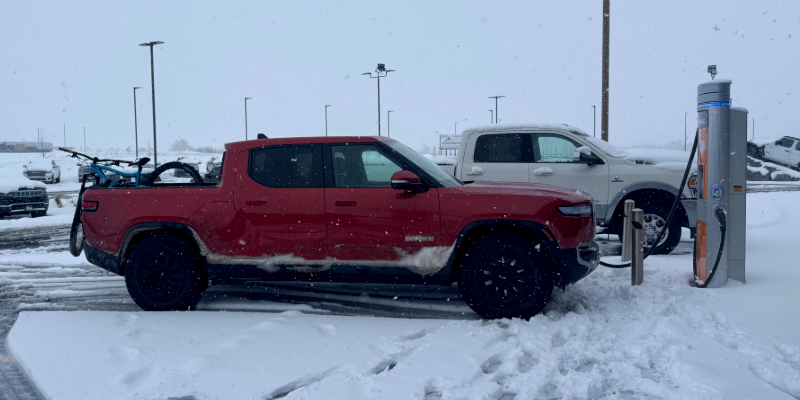
An electric vehicle charging station in Wyoming. (Photo: Dave Leon)
RIGHT-SIZING ELECTRIC VEHICLE TAXATION
Electric vehicle drivers in Wyoming currently pay three overlapping taxes: an annual EV decal, an Alternative Fuel Tax, and sales tax on electricity. This triple taxation is not only unfair to drivers — it’s causing public charging stations to go offline, due to the administrative burden.
Lawmakers are considering a bill that would allow residents to pay only one up-front fee, and would exempt smaller, low-speed charging stations (like hotels or senior centers) from licensing and tax requirements. HB 145 would shift the tax burden to high-speed chargers, which function more like gas stations. This bill benefits Wyoming residents and businesses, while ensuring that out-of-state EV drivers pay their fair share. It will be heard in the House Transportation Committee on Feb. 17.
ENHANCING WILDLAND FIREFIGHTING
A series of bills that would enhance Wyoming’s firefighting capacity have passed first reading on the House floor. HB0034 and HB0035 would give wildland firefighters more competitive retirement and paid leave plans, which is expected to increase recruitment and retention. And HB0036 and HB0037 would add more staff to the State Forester’s office, increasing capacity for fuels projects and wildfire response.
NUCLEAR WASTE: NO CONSTITUTIONAL AMENDMENT
A closely watched proposal that would have given voters the chance to decide whether nuclear waste should be stored in Wyoming has died. The measure called for a constitutional amendment requiring a public vote any time there’s a request to store spent nuclear fuel or high-level radioactive waste in Wyoming. Although this resolution failed introduction in the House 32:30, WOC supports the idea of consent-based siting.
Will advanced nuclear technology usher in a clean energy utopia — or deepen existing problems?
LATE ON A WEDNESDAY AFTERNOON in a nondescript conference room in Casper, the people filling rows of plastic chairs lean forward in their seats. Reporters lining the back wall raise cameras and audio recorders, straining to catch every word. The air hums with tension as one after another, members of the public speak into a microphone and address the lawmakers seated before them.
The people have traveled here, to the July 2025 meeting of the Wyoming Joint Minerals, Business, and Economic Development Committee, to voice their opinions on a draft bill that would help clear the way for a first-of-its-kind nuclear manufacturing facility near Bar Nunn. The proposed facility would build “microreactors,” which are portable nuclear reactors — sort of like a shipping container-sized diesel generator, except with nuclear fuel — that would aim to provide reliable power for military installations, hospitals, and remote towns.
Murmurs of approval and frustration rise from the crowd as nearly 40 people share everything from heartfelt pleas for caution to hopeful portraits of economic prosperity. At times the tension boils over. “You’re shoving it through!” one commenter shouts, amplifying what several others have declared: that a speedy approval of the measure would disregard the concerns of community members. The chairman’s gavel cracks over the woman’s shouts. The proceedings continue.
Finally, long after afternoon has turned to evening, the last comment has been heard. What happens next is something of an anticlimax: The legislators agree to table the bill — effectively suspending it from consideration, while leaving the door open to discuss the topic at a future meeting.
But they never get the chance. In October, amid the regulatory uncertainty and public outcry, Radiant Nuclear, the company behind the project, pulled the plug on its plans in Wyoming, announcing that it would build its facility in Tennessee instead.
Some people breathed a sigh of relief. Others lamented what they saw as a missed opportunity. But for everyone, this is just the beginning of a much bigger conversation.
The proposed Bar Nunn facility may be off the table, but interest in advanced nuclear technologies is only growing, and industry has its eyes on Wyoming. In 2025 the Trump administration issued four executive orders to expedite licensing and build nuclear power generation capacity. And Wyoming’s favorable tax environment, plentiful open land, and skilled energy workforce make it attractive for nuclear development. Which is why, advocates say, it’s time for Wyoming to make a comprehensive plan governing nuclear energy.
The problem is, there are still a lot of unknowns when it comes to advanced nuclear energy. The technologies on the horizon are largely untested, and important questions remain about their safety and affordability. These unknowns could have serious consequences for Wyoming, for generations to come. And policymakers need to carefully consider the consequences as they weigh how much — and what kind of — nuclear development to allow in the state.
INTEREST IN NUCLEAR ENERGY IS SURGING in part because it’s seen as a way to meet rising energy demands, driven largely by the growth of AI and data centers, without contributing to climate change.
Traditional nuclear energy, with its high price tags, burdensome waste, and painful history of catastrophic meltdowns, has had a rocky past. But the advanced designs coming to the fore these days, proponents say, could power America’s future in an affordable and safe way, while also curbing fossil fuel emissions.
“Advanced nuclear technology” can mean a lot of things. But what’s garnering the most attention from both industry and the public are “small modular reactors,” or SMRs.
Proposed SMR designs vary wildly in their fuel, cooling systems, and power output. The most basic SMRs are scaled-down versions of traditional reactors, of which there are currently 94 in operation across the country, supplying 19 percent of America’s electricity. But their designers say SMRs have important advantages over traditional reactors: They will produce less waste, for one. And because components would be manufactured in a central facility before being assembled at a power plant site — sort of like Lego building blocks for nuclear energy — they could theoretically be deployed much faster. (Microreactors, like the ones Radiant hoped to build, are even smaller than SMRs; while microreactors are designed to be portable, SMRs are not.)
SMRs are also being touted as eminently affordable. Once SMR designs have made it over research and development humps, their size and modularity will lead to great cost efficiencies, Erik Funkhouser, executive director of the nuclear advocacy organization Good Energy Collective, says. That means they are more likely to be built: A large reactor costing $12 billion may be very difficult to fund, for example, but $1–2 billion is comparatively easy. SMRs would be more similar to the energy output and cost of a natural gas plant, Funkhouser says, “and we fund those day in and day out.”
Nuclear proponents hope such advanced designs will usher in a “nuclear renaissance” that will reshape the way we supply electricity to the grid while solving climate change. But other experts caution that nuclear’s economic problems aren’t going away and that commercial deployment of advanced technologies is still a distant dream. Moreover, they worry a “renaissance” could deepen problems around safety and disposal of radioactive waste.
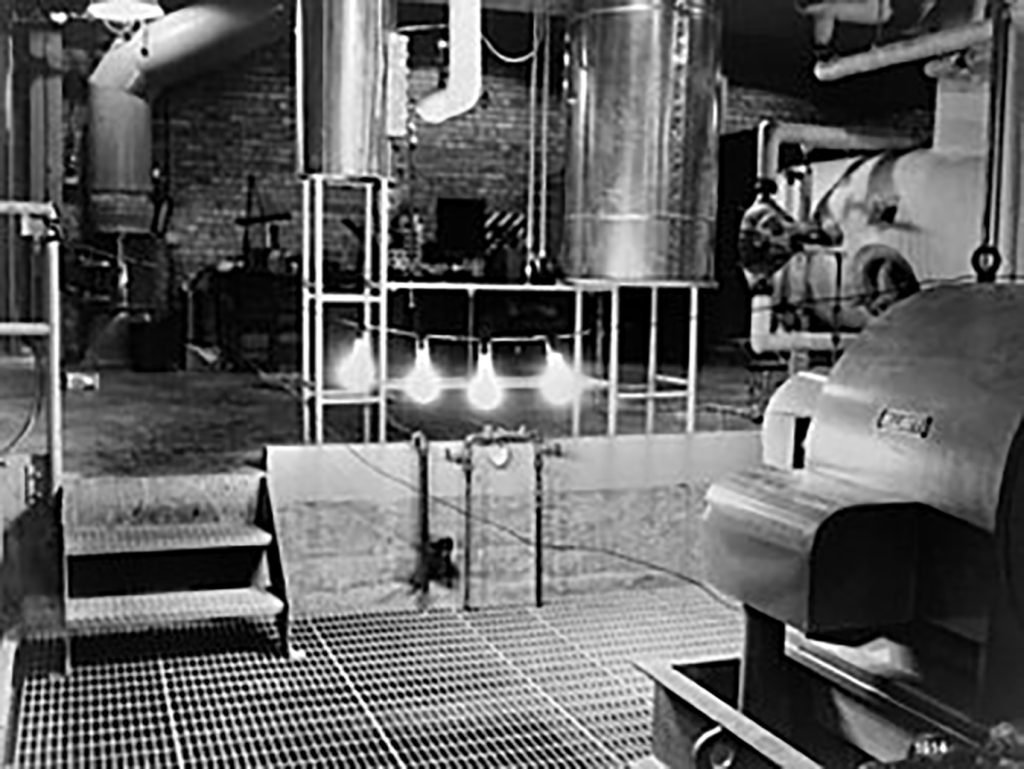
In 1951, Experimental Breeder Reactor 1 near Arco, Idaho successfully powered four light bulbs, becoming the world’s first nuclear reactor to produce electricity. It suffered a partial meltdown in 1955. Later, EBR-1’s reactor design gave way to more reliable alternatives.
DR. ALLISON MACFARLANE speaks with the measured, patient air of someone who has explained nuclear energy policy thousands of times. And she has: From 2012 to 2014, Macfarlane, a geologist by trade, headed the Nuclear Regulatory Commission, the federal agency that licenses the country’s nuclear energy projects.
Macfarlane sees many problems with a potential nuclear renaissance — starting with economics. The financial promises being made about SMRs simply aren’t realistic, she says. In her tenure as NRC chair, she oversaw licensing for three different SMR projects. Two of these projects failed in early stages because of concerns that they wouldn’t be economically viable. The third, developed by a company called NuScale, made it further along. But in 2023, this project also collapsed for economic reasons.
Traditional reactor projects have long suffered from construction costs that balloon far beyond initial projections, and SMRs are susceptible to these cost overruns, too. But they also have another issue to contend with: what experts call economies of scale. While an individual SMR might be cheaper to build than a large nuclear power plant, Macfarlane explains, you’d need several of them to generate the same amount of power. In the end, it would be cheaper to build one big plant than five small ones.
The bottom line for Macfarlane? Traditional nuclear power plants haven’t been cost-effective, and smaller reactors won’t be either. Other advocates fear that if they are built despite this, electric utility customers — homeowners, renters, and businesses — will be the ones to suffer as utilities look to recover their inevitable losses.
The problem is, there are still a lot of unknowns when it comes to advanced nuclear energy. The technologies on the horizon are largely untested, and important questions remain about their safety and affordability.
IN 2024, TERRAPOWER, A BILL GATES-FUNDED VENTURE, broke ground on its experimental nuclear power plant near Kemmerer — Wyoming’s first. The theoretical power output of TerraPower’s reactor is just above the threshold for what many consider to be an SMR. But its design, which uses molten sodium as a coolant instead of the water that traditional “light water reactors” use, is a perfect example of the advanced technology that proponents think will power a zero-emissions future.
The problem, Macfarlane says, is that these kinds of advanced nuclear facilities take a very long time to become operational. And we don’t have much time to curb the worst impacts of climate change.
“When you engineer anything — a fighter plane, or bridge, or nuclear reactor — you design it on your computer and then you have to build a scale model,” Macfarlane explains. As a design is scaled up and into three dimensions, aspects will shift and adjustments must be made, and then more adjustments must be made when moving from scale model to commercial scale. “With small modular reactors, we are at the computer model stage.”
There are only two SMRs being demonstrated in the Western world, according to Macfarlane: the Kairos reactor in Tennessee and the GE Hitachi BWRX in Ontario. Neither have completed construction. And the rest, she says, are so far from commercial deployment that they are basically figments of imagination.
Even TerraPower’s project in Kemmerer fits into this category, she says. While the project has cleared important hurdles, it has not yet received its construction permit from the NRC. And the gap between the design phase and large-scale commercial deployment for it and other advanced nuclear technologies could be on the order of three decades.
That’s why Macfarlane loses her patience when proponents laud advanced nuclear technologies as the silver bullet to combat climate change. “I’ll try not to be too colorful in my language…. If we had 20 years to fart around and perfect this technology, great,” she says. “But we don’t have endless time. We have to address this problem now.”
AT THE JULY MINERALS COMMITTEE MEETING IN CASPER, much of the opposition to Radiant’s facility had to do with waste. High-level radioactive waste, an unavoidable byproduct of nuclear power generation, produces fatal doses of radiation and could lead to far-reaching impacts on people and the environment if leaked into ground or surface water. Radiant’s plan involved storing waste from its microreactors onsite in Bar Nunn.
Wyoming law prohibits spent nuclear fuel from being stored within the state. But the company was asking for an exception. (A similar exception was given to TerraPower years earlier.)
In the short term, we actually have pretty foolproof ways to store nuclear waste, Macfarlane says. The current storage standard is within “dry casks,” or large steel canisters surrounded by thick concrete. And these work well: Even dry casks tipped over and inundated during the Fukushima disaster, for example, were undamaged.
But people are correct to worry about the long term. High-level waste remains radioactive for tens of thousands of years. While dry casks will hold waste safely for decades, perhaps even for a century, there’s no way to avoid their eventual degradation, Macfarlane explains. That means someone must always be monitoring them, and someone must foot the bill when it’s time to change them out. “The question of who’s going to pay for this 100 years from now is not answered at all,” Macfarlane says.
Another source of uncertainty is the lack of a federal site for permanent disposal of high-level waste. In TerraPower’s case, the company is allowed to temporarily store waste from their operations onsite, until a national repository is established. But such a site doesn’t yet exist. And the prospect of establishing one in the foreseeable future is bleak, meaning that waste would likely be stored within the state for far longer than “temporary” might suggest.
Wyomingites have good reason to be cautious about radioactive waste. From 1958 to 1963, the Susquehanna-Western uranium mill near Riverton processed uranium ore on land seized from Wind River Tribal members through eminent domain. When it shut down, a 70-acre pile of radioactive tailings was left behind.
Without a lining to keep it contained, waste soon seeped into the groundwater. Local families began experiencing cancer at alarming rates — an apparent impact of the radioactive plume that continues to this day.
When remediation efforts began, tribal members were often excluded from the decision-making process. “We were stymied at every turn,” says Gary Collins, a Northern Arapaho member involved in the discussions. He describes an atmosphere of broken promises and disregard for the people bearing the waste’s cancerous brunt.
Today, decades later, the waste has been removed. But the danger of contamination lingers, unseen by the people who live nearby. Collins rattles off a handful of local families impacted by cancer. “When you drive by here, you don’t see anything different,” he says. “You see a vast open field. You see somebody’s cows out there grazing away.” Collins pauses. “Are you eating those cows?”
Uranium processing is not the same as a nuclear power plant or nuclear manufacturing facility. But the story of the Susquehanna mill tailings offers a troubling lesson: When radioactive waste isn’t given the diligence it deserves, the impacts, which can last for generations, often fall on the most vulnerable communities.
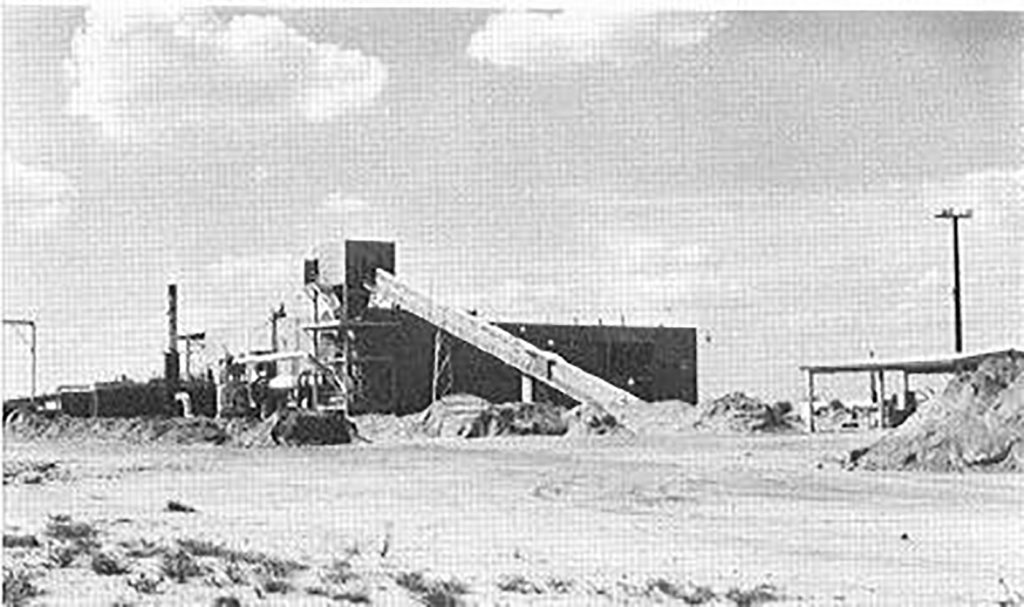
A uranium mill operated by Susquehanna-Western, Inc. in Karnes County, Texas. When another Susquehanna mill near Riverton, Wyoming closed in 1963, it left behind nearly 1.8 million cubic yards of radioactive waste.
How to store radioactive waste safely, in both the short and long term, is an important question. But what about other safety concerns? After all, nuclear energy still carries the stigma from catastrophic meltdowns at Chernobyl and Fukushima. Would advanced nuclear technologies be, as some of their proponents claim, less prone to dangerous accidents?
In the years since those notorious meltdowns, the industry has made important safety advancements. But Dr. Edwin Lyman, a nuclear physicist and director of nuclear power safety at the Union of Concerned Scientists, thinks that many of the advanced nuclear technologies in the spotlight today are not likely to be much safer than nuclear power plants from earlier eras.
“We don’t have endless time. We have to address this problem now.“
— Dr. Allison Macfarlane
Part of the problem, according to Lyman, is that many of these technologies aren’t as “advanced” as industry would have you believe. “Most of the so-called advanced reactors are really repackaged designs from decades ago that were attempted but didn’t succeed,” he says. Today’s “innovative” technologies have designs similar to flawed projects from the 1950s and 60s: There was the Experimental Breeder Reactor 1 in Idaho, which in 1951 was the world’s first reactor to produce electricity — before an accidental meltdown damaged half its fuel in 1955. And there was Fermi 1 in Michigan, which suffered a partial meltdown of its reactor core in 1966.
Unlike the well-known meltdowns of history, these accidents didn’t result in any major release of radioactive material. But the technologies were discarded in favor of safer, more reliable reactors — which are what’s operational today.
Now industry is returning to those older, experimental designs, as the basis for some of the “advanced” technologies of today. To Lyman, that’s risky. He’s concerned that when it comes to some advanced designs, there are still questions without answers backed by rigorous data — such as the risk of fire posed by sodium coolants, and how well physical containment structures would work in the event of an accident. Security is another concern, with some designs increasing the risks associated with nuclear proliferation and nuclear terrorism.
MORE CLEAN ENERGY IS NEEDED TO POWER AMERICA’S FUTURE, and even many critics of advanced nuclear technology, like Macfarlane, aren’t advocating shutting down existing nuclear plants. “We definitely need that carbon-free electricity,” she says.
But nuclear isn’t the only zero-emission energy source on the table. Renewables such as wind and solar are quickly becoming cheaper. And while nuclear industry proponents have long scoffed at the reliability of these sources, this is far from the problem it’s made out to be, Dr. Amory Lovins, a Stanford University energy efficiency researcher, says. Wind and solar may be variable, but “variable does not mean unreliable,” he says — especially as modern wind and solar forecasting, significant improvements in battery technology, and other advancements are shoring up the reliability of renewable-heavy grids.
Unlike advanced nuclear projects that won’t come online commercially for years, renewables are adding valuable capacity to the grid right now. “There’s no way nuclear can address climate change in any timely fashion,” Macfarlane says. But renewables, by being cheaper and quicker to deploy, give us a chance.
In the long term, nuclear may well be part of the puzzle that helps the U.S. meet growing energy demands. It may even make sense for Wyoming to host new nuclear projects. But bringing nuclear energy to Wyoming isn’t something we should rush. Even if we speed ahead with advanced nuclear technologies, it’s not likely to add enough clean energy capacity fast enough to solve the climate crisis — and it is likely to expose Wyoming communities to unnecessary risks.
As Lyman, the nuclear physicist, says, speed isn’t the friend of safe nuclear energy. And asking important questions — about how industry and government plan to build projects responsibly, deal with waste, keep communities safe, and pay for it all — takes time.
It will take even more time, and surely many more public meetings stretching late into the night, to build a comprehensive state policy around nuclear energy.
But slowing down and making well-informed decisions could yield clarity. In a world of unknowns, that clarity may offer the strongest foundation for moving forward, on Wyoming’s terms.
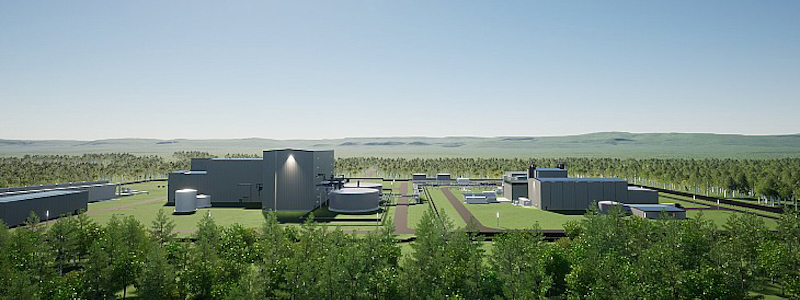
Header image: An artist’s rendering of TerraPower’s planned Natrium nuclear power plant near Kemmerer, Wyoming. (Courtesy TerraPower)