Wyoming just LEVELED THE PLAYING FIELD for ELECTRIC VEHICLES

Here’s what you need to know


UNTIL RECENTLY, electric-vehicle drivers in Wyoming faced triple taxation. They had to purchase an annual EV decal for $200 a year, they paid an Alternative Fuel Tax at charging stations (similar to a gas tax), and they paid sales tax on electricity. This triple taxation was not only unfair to drivers — it also caused some public charging stations to go offline, which is problematic in a state where charging infrastructure is sparse.

A new law makes the system fairer for Wyoming EV drivers, reduces red tape for charging stations, and ensures that out-of-state visitors pay their fair share to maintain roadways.


FAQ

I live in Wyoming and own an electric vehicle. What taxes will I have to pay now?

You will still need to pay an annual Electric Vehicle decal fee, but the price has been cut in half, from $200 to $100.

You will also pay the Alternative Fuel Tax (3.5 centers per kilowatt-hour), but only at high-speed (Level 3) public charging stations. This tax is roughly equivalent to Wyoming’s gas tax.

You do not have to pay sales tax at high-speed chargers. Gasoline and diesel are also exempt from sales tax at the pump, so this puts them on a level playing field. 


What are the different ways electric vehicles can charge?

There are 3 primary ways for an electric vehicle to charge. 

Level 1: Charging using a regular home outlet—the same type you would plug a cell phone into. Some EV owners rely exclusively on Level 1 charging, especially if they drive less than 40 miles per day, but it can take days to fully recharge a vehicle.

Level 2: Charging using a dedicated high-power outlet—the same type used for a home dryer or oven. Level 2 chargers can recharge a car overnight (6–10 hours). Homeowners frequently install them, and they are also often available at public locations such as workplaces, downtown shopping districts, car dealerships, and hotels, often as an amenity to attract visitors.

Level 3: These high-speed chargers work more like traditional gas pumps for long-distance travel. They are more complicated than what you can install at home, but they’re super fast: They can fully charge an EV in 20–30 minutes.

What if I own a plug-in hybrid vehicle? 

Under the new law, owners of plug-in hybrid vehicles (PHEVs) will need to purchase an annual EV decal, which costs $50 per year. PHEV owners pay less than full EVs because their vehicles run on both electricity and gasoline. While they may charge at home, they also pay the state’s fuel tax when filling up with gasoline.

How do the taxes on EVs compare with the taxes that conventional drivers pay at the pump?

The Alternative Fuel Tax closely matches the state’s fuel tax of 24 cents per gallon.

When electric vehicles are driven long distances in the state, their owners pay the Alternative Fuel Tax at high-speed charging stations. This system works much like paying fuel tax when you buy gas—the more you drive, the more you pay. However, because many EV owners also charge at home or at Level 2 stations that are exempt from the Alternative Fuel Tax, they pay an annual EV decal fee to help make up for that loss of fuel tax revenue. This fee was designed to be as fair as possible and takes into account factors such as efficiency differences between gas and electric vehicles, expected miles traveled, and other considerations.

Bottom line: If you own an EV, you can generally expect to pay about the same amount per year as drivers of conventional vehicles.

How will Wyoming have the money to maintain roads if EV drivers are paying less in taxes?

Wyoming’s Department of Transportation could actually collect more revenue under the new law, because out-of-state drivers will start paying their fair share. Historically, out-of-state EV drivers were not taxed at all when driving through Wyoming. More recently, they’ve paid a modest tax, but it’s been very low. Now, they will pay 3.5 cents per kilowatt-hour at high-speed public charging stations, which is commensurate with gas tax.

Big picture, this law levels the playing field between gas and electric vehicles and will be good for Wyoming’s economy.

I’m the manager of a business, and we offer public charging as a perk for our patrons. How will the new law affect us?

Under the new law, Level 2 charging stations are exempt from licensing requirements and will no longer have to pay the Alternative Fuels Tax. In Wyoming, laws generally go into effect on July 1 of the year in which they are enacted, so you should continue to track electricity and submit payments until WYDOT provides additional guidance or updates.

If you run a Level 3 charger, you will need to be licensed and pay the Alternative Fuels Tax.

I heard the old tax system caused a bunch of EV charging stations to shut down. Why was that? Will those charging stations come back online now?

Under the old system, a number of Level 2 charging stations were removed from public access, due to administrative and financial burdens. Unlike gas stations, Level 2 EV charging in Wyoming is offered by a range of entities, from hotels to local businesses to car dealerships. In most instances, EV charging is not their primary business; it’s something they offer as a perk or a way to attract visitors. 

Prior to now, there was so much red tape to navigate in order to comply with the state’s tax laws that some of these businesses decided it wasn’t worth it to continue offering public charging. Many smaller, low-speed charging stations didn’t even have a way to track the amount of electricity their patrons were using. We expect some of these stations to come back online once the new law takes effect, but there is a chance that some locations may have permanently decommissioned their chargers. If you are unsure of a station’s status, you can call ahead or check the PlugShare website.

I don’t own an electric vehicle. How does this impact me?

You can rest assured that both out-of-state and Wyoming EV and PHEV drivers are paying their fair share of road use taxes and fees. You can also be confident that those who choose to go electric will not be penalized for their decision. 

Big picture, this law levels the playing field between gas and electric vehicles and will be good for Wyoming’s economy. Removing red tape will make it easier for charging infrastructure to expand, which will help residents and visitors alike travel around the state with ease. As more people switch to electric vehicles, better charging infrastructure and fairer taxes will keep Wyoming open for business, regardless of what people drive.

Header image: Dave Leon
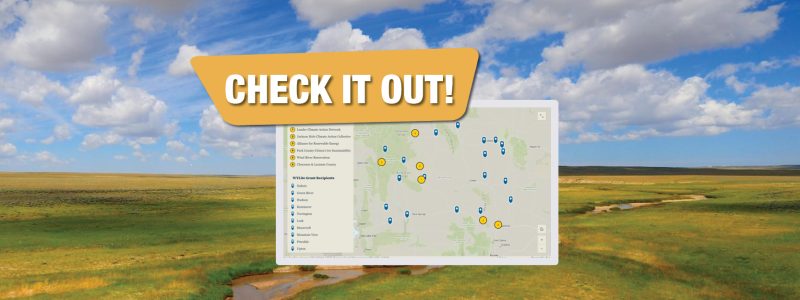
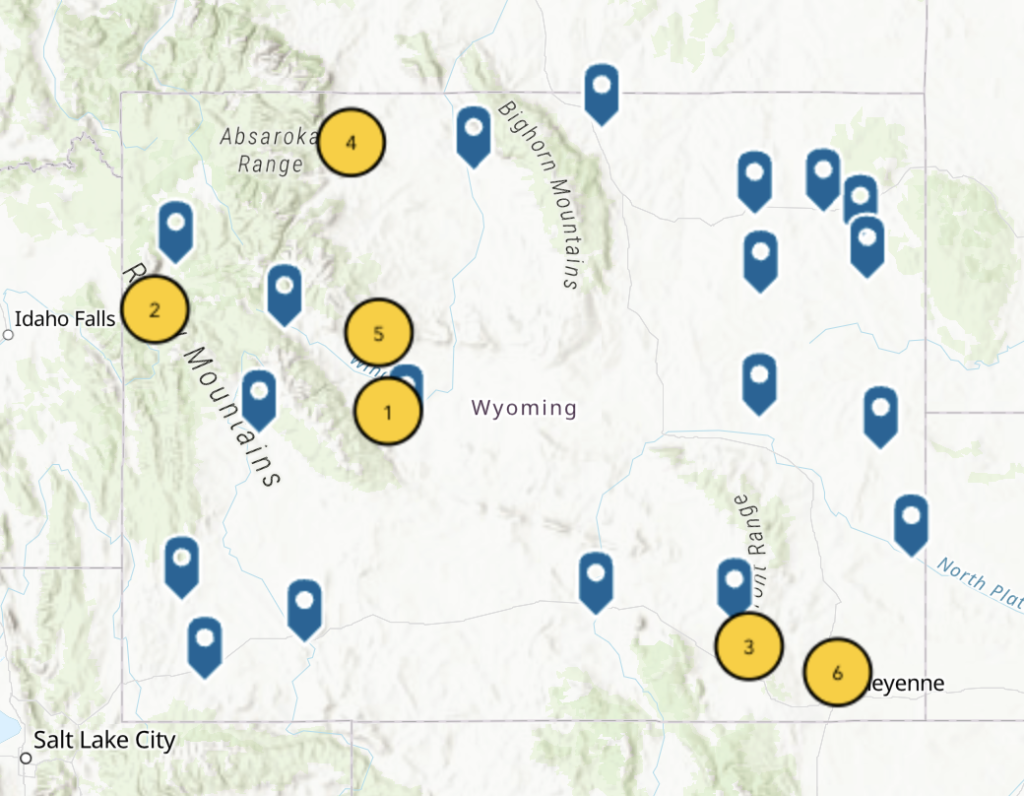
A reason for hope: Check out our Community Climate Map!

Over the last several months we’ve seen the rollback of programs designed to help Wyoming communities adapt to a changing climate, reduce emissions, lower utility bills, and improve local infrastructure. We’ve also seen targets placed on renewable energy and the very science of climate change.

This news has been difficult to stomach. But there’s reason to be hopeful. That’s because local communities around the state are stepping up to address the challenges ahead.

We put together a new Community Climate Map to highlight the work that local Wyoming groups are doing to make their communities more sustainable and resilient. We invite you to take a look around.

The science of climate change is real, and Wyoming is already seeing impacts play out — from more intense fires, to lower snowpack, water scarcity, and worsening air quality.

In the absence of stronger national leadership, now is a critical moment for community-based action. Groups and individuals around the state are already making a difference. They inspire us — and we hope they will inspire you to reach out and get involved in your community.

Not seeing your community on the map, or have questions about how to get more involved? Let us know. Our team is committed to updating this resource and helping you get connected to those on the ground doing the hard work. draft assessment needs.

Image: Russ Schnitzer

Springing into action: Fighting to fund Wyoming communities

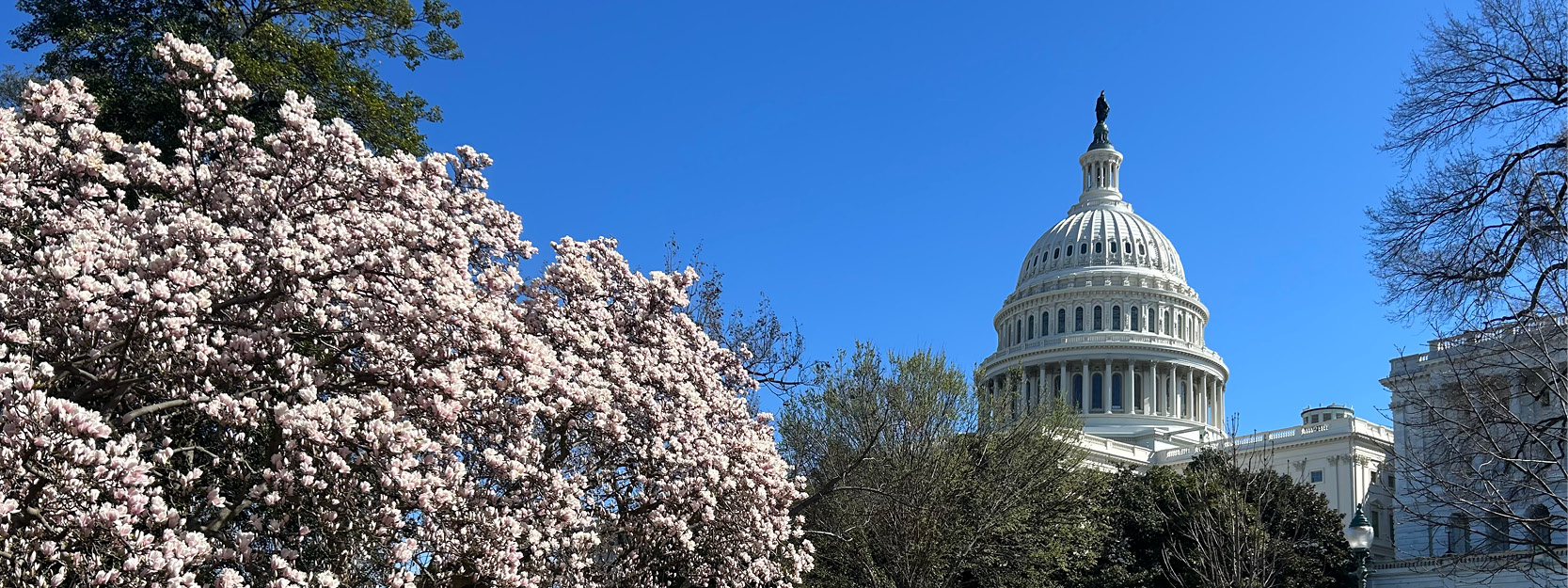
On March 25, Big Wind Carpenter and I took off from a small Wyoming airport, bound for our nation’s capital, Washington, D.C. As we landed, the city was blanketed in the pink and white blossoms of cherry trees — an unmistakable sign of spring. While the season’s beauty filled us with optimism and a sense of hope, the urgency of our mission and the uncertainty facing Wyoming’s communities stood in stark contrast to the otherwise picturesque scene.

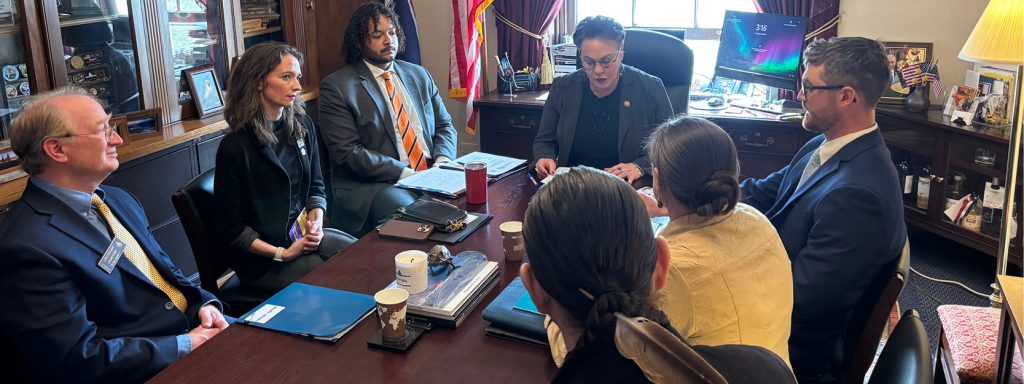
We were joined by elected officials from across Wyoming, city leaders, and union representatives to advocate for essential federal funding opportunities with our state’s congressional delegation. 

Our goal in D.C. was to fight for the projects and programs that Wyoming communities, Tribes, and businesses are counting on — ones that promote energy efficiency and clean energy, that Wyomingites had vetted, and that were in the pipeline to be rolled out across the state. We spoke out in favor of programs like Home Energy Rebates, Solar for All, and Tribal Electrification, which collectively represent over $110 million in previously approved grant funding. These funds would help Wyoming’s low-income households afford rising electricity costs and make necessary home improvements — benefitting over 41 percent of Wyoming households

Sadly, the future of these programs is now uncertain.

We also spoke in support of other long-standing programs that could be lost. The Rural Energy for America Program is one, which helps small rural businesses and agricultural producers lower operating costs through investing in energy efficiency and clean energy projects. Likewise, Investment Tax Credit and Direct Pay helps lower up-front costs for residents, local governments, schools, and businesses to afford their own rooftop solar or renewable projects. Finally, we fought for continued investment in public safety and quality of life, which makes local infrastructure more resilient to flooding and natural disasters, creates more walkable communities with safe routes to schools, and enhances occupational safety for Wyomingites working in mines.  

Our presence was about more than policy — it was about real people and real projects. We were there to highlight the direct impacts recent federal decisions will have on our state and its people, and make sure that Wyoming voices are heard during the fast-tracked decision-making that has been largely absent of public input. 

For months, our phones at the Wyoming Outdoor Council have been ringing off the hook. Community members have been asking which programs have been cut. Were the ones that help low-income residents afford their utility bills, like the low-income energy assistance program, now gone? Small business owners are worried about not receiving the federal grant portion for projects already underway. Tribal program employees are facing stalled infrastructure plans. 

The message we’ve heard is clear: these funding cuts are hurting our communities. Yet, despite these challenges, hundreds of millions in federal funds have been frozen, and Congress is now considering further cuts to these vital programs — to fund tax breaks that overwhelmingly benefit corporations and the wealthy, leaving Wyoming residents to bear the cost.

In our meetings with Sen. John Barrasso, Rep. Harriet Hageman, and the staff of Sen. Cynthia Lummis, we emphasized how one-time investments, like these programs, could significantly benefit our communities. We shared how federal funding is an investment that furthers local priorities by: saving money, diversifying economies, creating jobs, and improving critical infrastructure. We worked to translate these ideas into real, on-the-ground impacts by showing how federal grants provide a pathway to bring federal tax dollars back to Wyoming by reinvesting them in our communities.

We also thanked the delegation for taking the initiative in recent years to better equip communities, Tribes, and businesses in securing federal grants — they helped host Wyoming’s Federal Funding Summits alongside the governor, and worked to integrate Wyoming’s new Grants Management Office. Because of these resources, Wyoming communities are now better positioned to compete with other states for federal funds and our workforce is more competitive. 

Our meetings in D.C. weren’t without their challenges, however. We faced resistance on issues that seemed more tied to national-level talking points than what is actually going on in Wyoming communities. 

This only reinforced a crucial point: while we brought the stories of Wyoming’s residents to D.C., our fight isn’t over yet.

Now that we’re back home in Wyoming, the fight continues. Your voices are more critical than ever. With the support of your calls and letters, WOC was able to take one more step in advocating for the programs that matter to you. But it’s still you — Wyoming’s ranchers, business owners, tribal members, and everyday citizens — who have the most powerful voice. Directly communicating with our elected officials and sharing your personal experiences and concerns will make the real impact. 

Right now, Congress is actively working on a budget reconciliation process where these programs could be on the chopping block. House leadership shared their aspirations to have a new budget signed by President Trump by as early as May 26. That means, the time to act is now — and fast.

These federal funding opportunities are more than just figures on a spreadsheet; they are a direct investment in the hopes and dreams of Wyoming’s future, and you and your neighbors. These programs help move our communities towards having healthier air to breathe, clean water to drink, resilient infrastructure, and thriving local economies. Let’s not forget that spring is a time for new growth and new beginnings. Together, we can work hard to secure a future where Wyoming thrives.

MEGHAN RILEY
Wildlife Program Manager
meghan@wyomingoutdoorcouncil.org